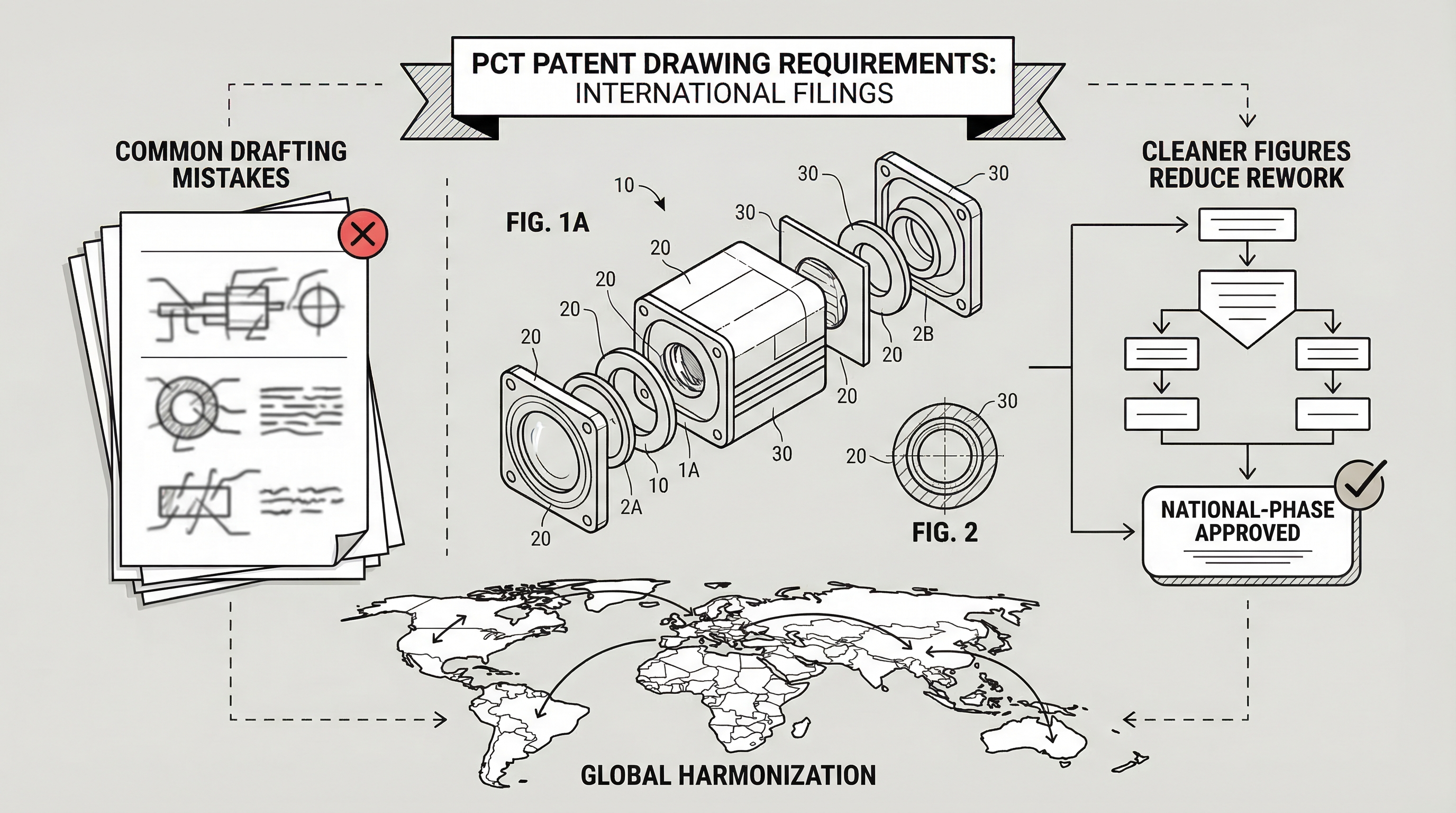
PCT Patent Drawing Requirements 2026: International Filing Guide
Why weak PCT figures cost you 3x in national phase. Complete PCT and WIPO drawing rules, conservative drafting choices, and reusable figure workflows. 2026.
TL;DR: Treat PCT figures as the permanent baseline, not a temporary draft — a weak international set gets copied, translated, and multiplied into every national-phase office (USPTO, EPO, CNIPA, JPO, KIPO). Draft conservatively from the start with clean black-and-white line art, uncluttered page composition, reference numerals that stay stable across the set, and logical figure sequencing, so later office-specific adaptation is a trim rather than a rebuild.
PCT Patent Drawing Requirements for International Filings
Many teams treat PCT drawings as a temporary midpoint and assume they can clean everything up during national phase. That is usually a mistake. A weak international figure set does not disappear later. It gets copied, translated, revised, and multiplied across every downstream office.
The smarter approach is to treat PCT drawing quality as the baseline that everything else builds on.
If you are mapping multiple jurisdictions at once, use the Patent Drawing Requirements by Office guide as your starting point.
Why PCT Figure Quality Has Outsized ROI
PCT filing programs often sit at the center of a larger international strategy. That means figure problems introduced early can spread into:
- US continuation or national phase work
- EPO prosecution
- CNIPA adaptation
- JPO and KIPO local drafting review
When the first international set is disciplined, later office-specific adaptation becomes faster, cheaper, and less error-prone.
The Core Priorities for PCT-Oriented Figure Sets
A strong PCT-ready set should aim for conservative, portable quality:
- Readable black-and-white line art
- Clear spacing and uncluttered page composition
- Reference numerals that stay stable across the set
- Figure sequencing that helps the disclosure unfold logically
- Drawings that support later office adaptation without major rebuilds
In other words, the goal is not just to get something filed. The goal is to file something that survives international expansion gracefully.
Common PCT Mistakes
The most expensive PCT drafting mistakes are usually strategic:
- Treating the international set as a placeholder
- Deferring figure cleanup until national phase
- Letting labels drift because "we can fix it later"
- Using noisy source images that will be harder to standardize downstream
Every one of these shortcuts creates compounding work later.
How PatentFig AI Supports International Filing Workflows
PatentFig AI is useful at the PCT stage because it helps teams create a cleaner common source before office-specific branching begins. Instead of building six different regional figure sets from scratch, teams can standardize a higher-quality baseline first.
That is especially valuable when the invention includes:
- multi-view product figures
- system diagrams
- process flowcharts
- figure sets that must remain internally consistent over time
Related Office Guides
If your PCT application is likely to enter multiple jurisdictions, compare this guide with:
Create Patent Figures Faster
Ready to turn rough sketches, CAD screenshots, or prompts into patent-ready visuals? Open the PatentFig AI generator.
Next step: Run your figures through the free figure checker before you file — it validates margins, line weight, DPI, and numerals against your target office. Or review the patent drawing requirements summary.
Author

Categories
More Posts
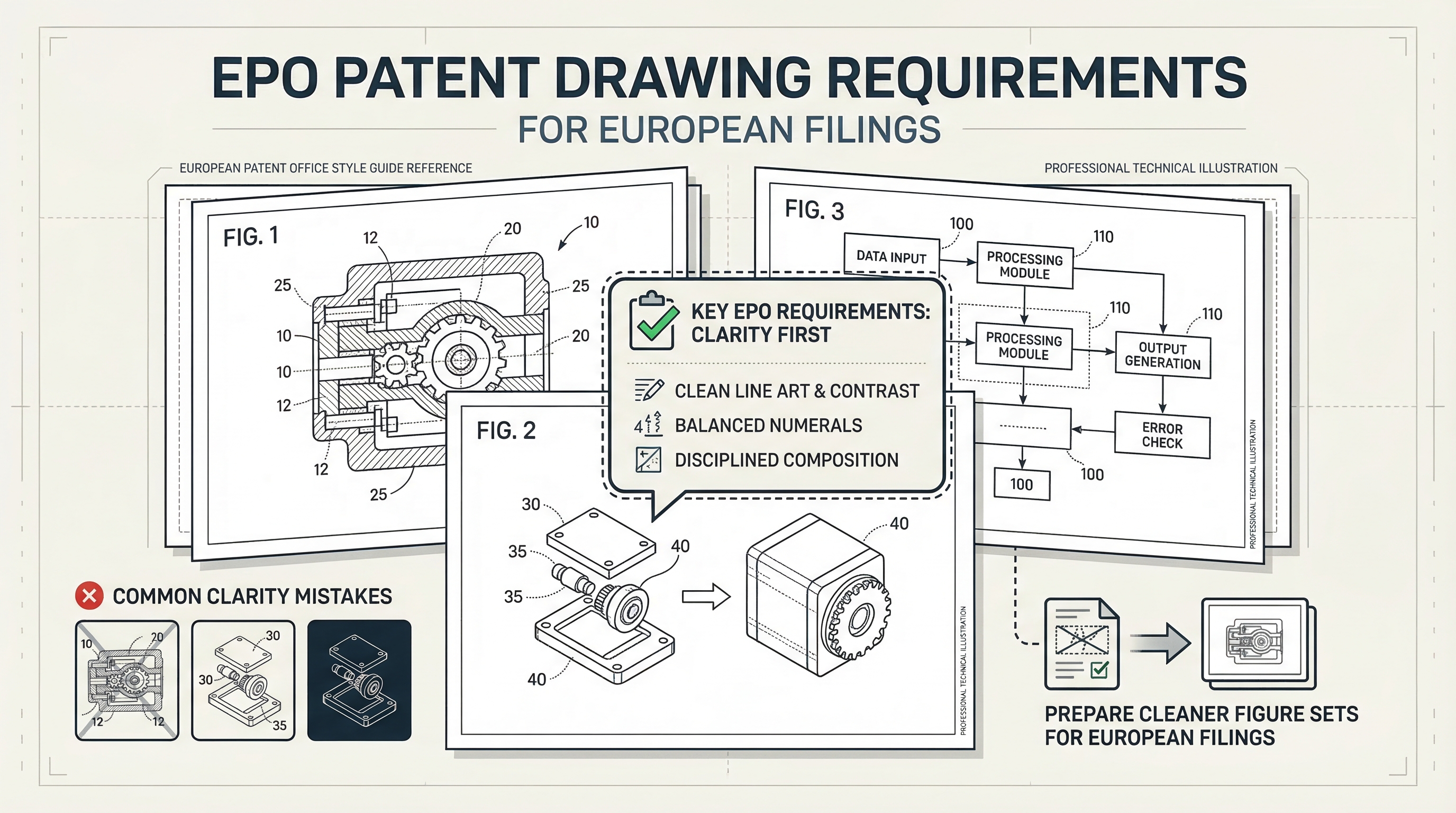
EPO Patent Drawing Requirements 2026: European Filing Guide and Checklist
EPO figure rules, common clarity mistakes, and a disciplined workflow for European patent filings. Learn when USPTO-ready figures fail at the EPO. 2026 guide.
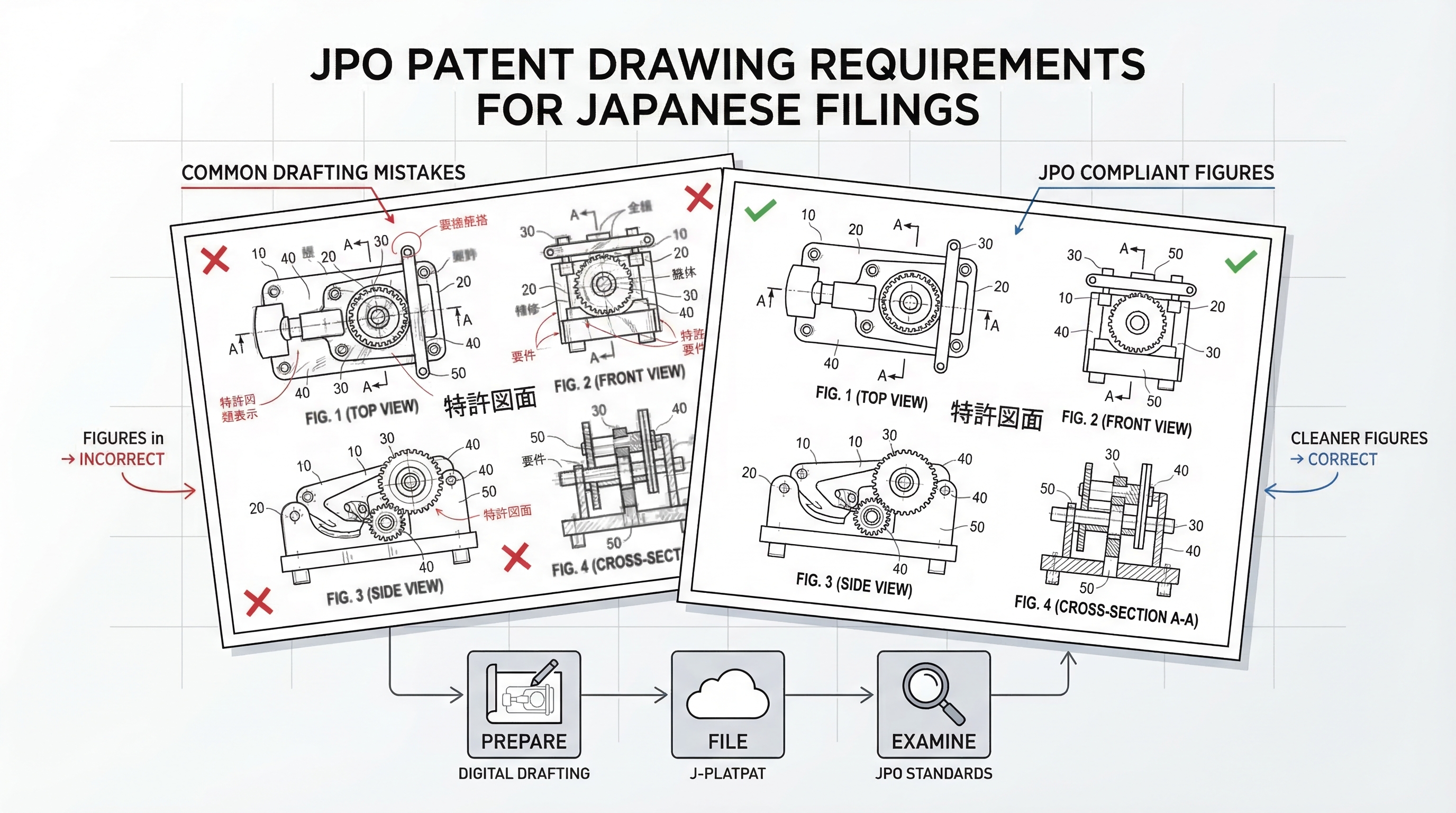
JPO Patent Drawing Requirements 2026: Complete Guide for Japanese Filings
JPO drawing rules, multi-view consistency, and common drafting mistakes for Japanese patent filings. Get cleaner figures with less rework. 2026 guide.
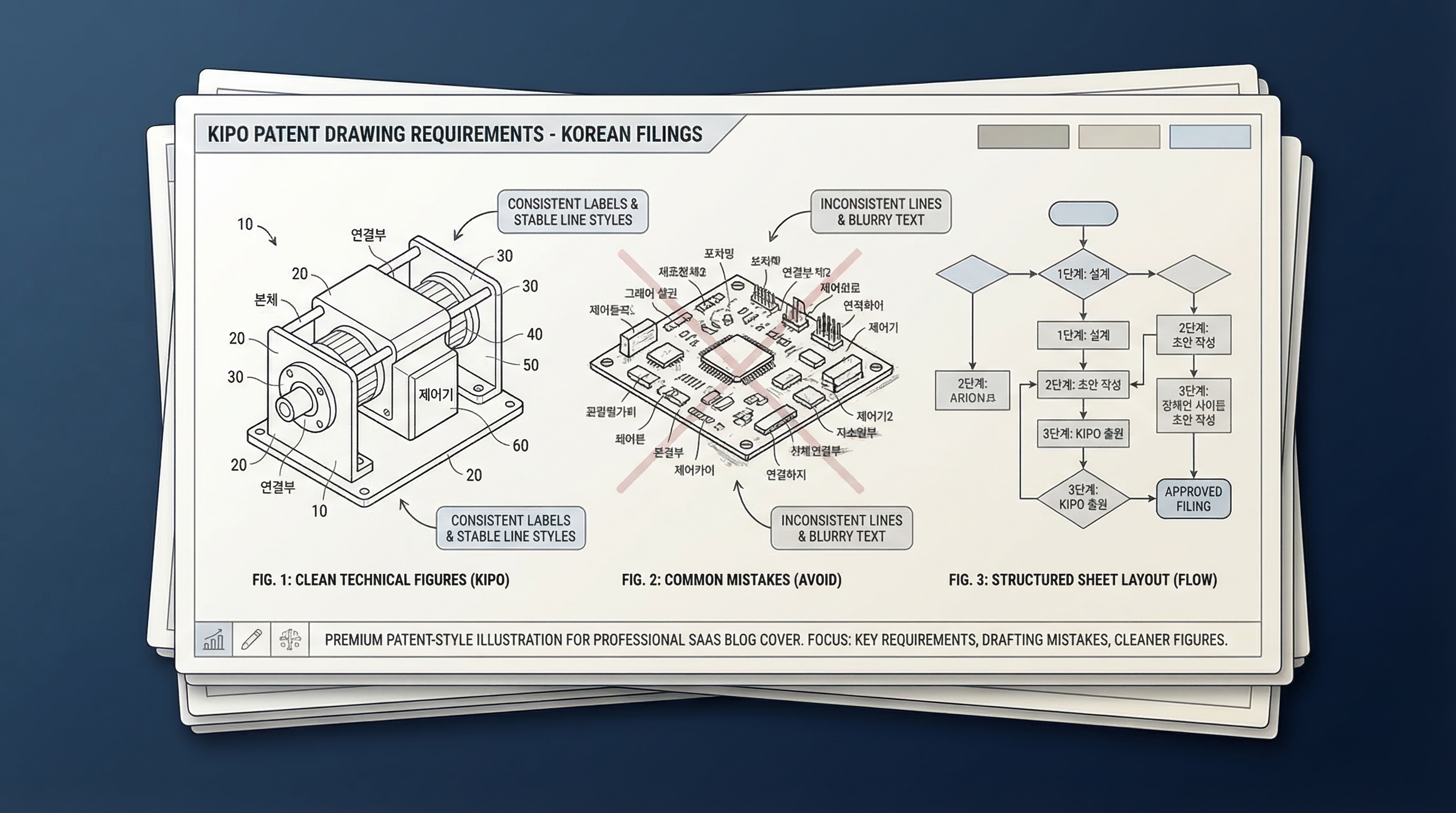
KIPO Patent Drawing Requirements 2026: Korean Filing Checklist & Examples
KIPO patent drawing requirements for 2026: A4 setup, margins, labels, reference numerals, Korean filing checks, and examples for patent teams.
Newsletter
Join the community
Subscribe to our newsletter for the latest news and updates