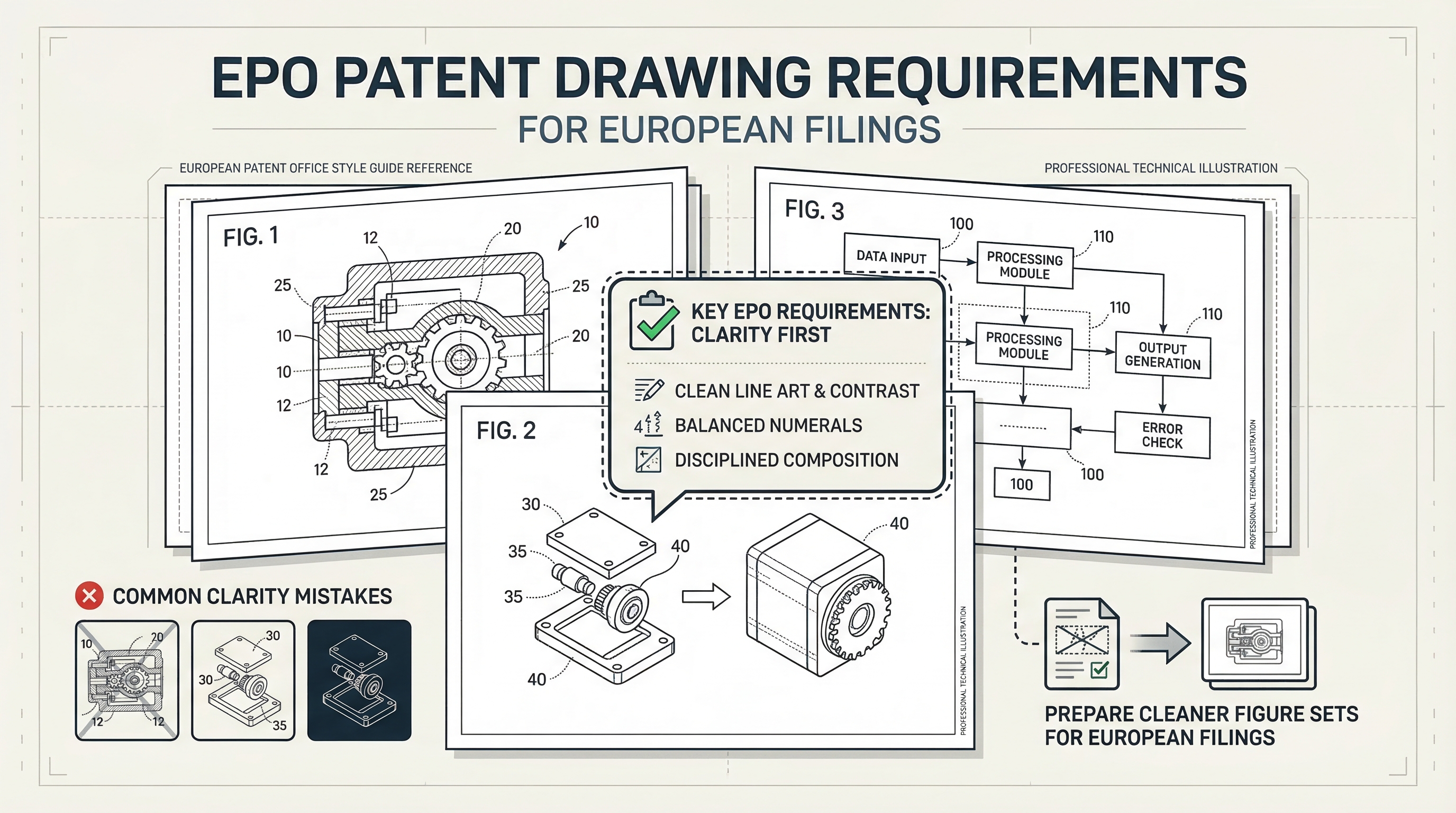
EPO Patent Drawing Requirements 2026: European Filing Guide and Checklist
EPO figure rules, common clarity mistakes, and a disciplined workflow for European patent filings. Learn when USPTO-ready figures fail at the EPO. 2026 guide.
TL;DR: The EPO evaluates figures as part of the full disclosure, and the four review points that matter most are readable reproduction, reference signs that stay consistent across every view, figure sequencing that reads as one coherent technical narrative, and clean alignment between drawing labels and the description's terminology. A USPTO-ready figure set is not automatically EPO-ready — recheck reference signs, page crowding, and spec alignment before filing in Europe.
EPO Patent Drawing Requirements for European Filings
European patent prosecution often rewards disciplined figure sets more than flashy visuals. If your drawings are easy to reproduce, logically sequenced, and tightly aligned with the written description, you remove a surprising amount of downstream friction from the filing process.
That is why teams preparing European applications should treat the EPO as its own drafting target instead of assuming that a generally "good-looking" patent figure set will automatically carry over from another office.
Need a broader map first? Start with the Patent Drawing Requirements by Office guide, then return here for EPO-specific guidance.
Why EPO-Oriented Figure Discipline Matters
The EPO does not evaluate figures in isolation. Drawings are part of the full disclosure package, which means figure quality affects how easily an examiner can connect visual elements to the claims and description.
In practice, strong EPO-ready figures tend to share the same characteristics:
- Clear black-and-white line work with no distracting visual noise
- Stable reference signs that remain consistent across related views
- Figure sequencing that makes technical sense from one sheet to the next
- Enough visual detail to support understanding, without overcrowding the page
When those basics slip, the entire application feels weaker, even if the underlying invention is solid.
Core EPO Drawing Priorities
For European filings, the highest-value review points are usually:
- Readable Reproduction: Lines, labels, and figure relationships must remain understandable after normal document handling and reproduction.
- Reference Sign Consistency: If an element appears in multiple figures, the same reference sign should identify the same thing throughout the application.
- Drawing-to-Description Alignment: The terminology used in the specification should map cleanly to the elements shown in the figures.
- Logical Figure Structure: Related figures should read like one coherent technical narrative rather than separate visual artifacts.
These are not abstract editorial preferences. They directly affect how efficiently an examiner can interpret the disclosure.
Common EPO Filing Mistakes
Teams preparing Europe-bound figure sets often run into the same avoidable issues:
- US-first assumptions: Treating a USPTO-ready set as automatically optimized for the EPO
- Label drift: The same component is renamed or renumbered across figures
- Overloaded pages: Too many details are forced onto one sheet instead of being split into clearer figures
- Specification mismatch: The written description and the drawing labels do not align cleanly
When these issues accumulate, the figure set becomes harder to prosecute, harder to translate internally, and harder to maintain across parallel filings.
How PatentFig AI Fits an EPO Workflow
PatentFig AI helps European filing teams by reducing the manual cleanup usually required between source material and filing-ready figures. Instead of treating each sheet as a one-off drawing task, teams can standardize the full figure set around consistent line style, numbering logic, and page structure.
That matters most when you are working from:
- CAD screenshots that need formal patent presentation
- Product image references that must become cleaner line art
- Multi-view product sets that need stable geometry and labels
- System diagrams that must look like patent figures rather than presentation slides
Recommended Review Path
If Europe is your next filing destination, a practical review order is:
- Confirm that each figure supports the written disclosure clearly.
- Audit reference signs across every related page.
- Split any sheet that feels visually crowded.
- Standardize line quality and presentation style.
- Only then finalize export and filing packaging.
Related Office Guides
If you are preparing a portfolio that spans multiple jurisdictions, compare EPO drafting expectations with:
Create Patent Figures Faster
Ready to turn rough sketches, CAD screenshots, or prompts into patent-ready visuals? Open the PatentFig AI generator.
Next step: Run your figures through the free figure checker before you file — it validates margins, line weight, DPI, and numerals against your target office. Or review the patent drawing requirements summary.
Author

Categories
More Posts
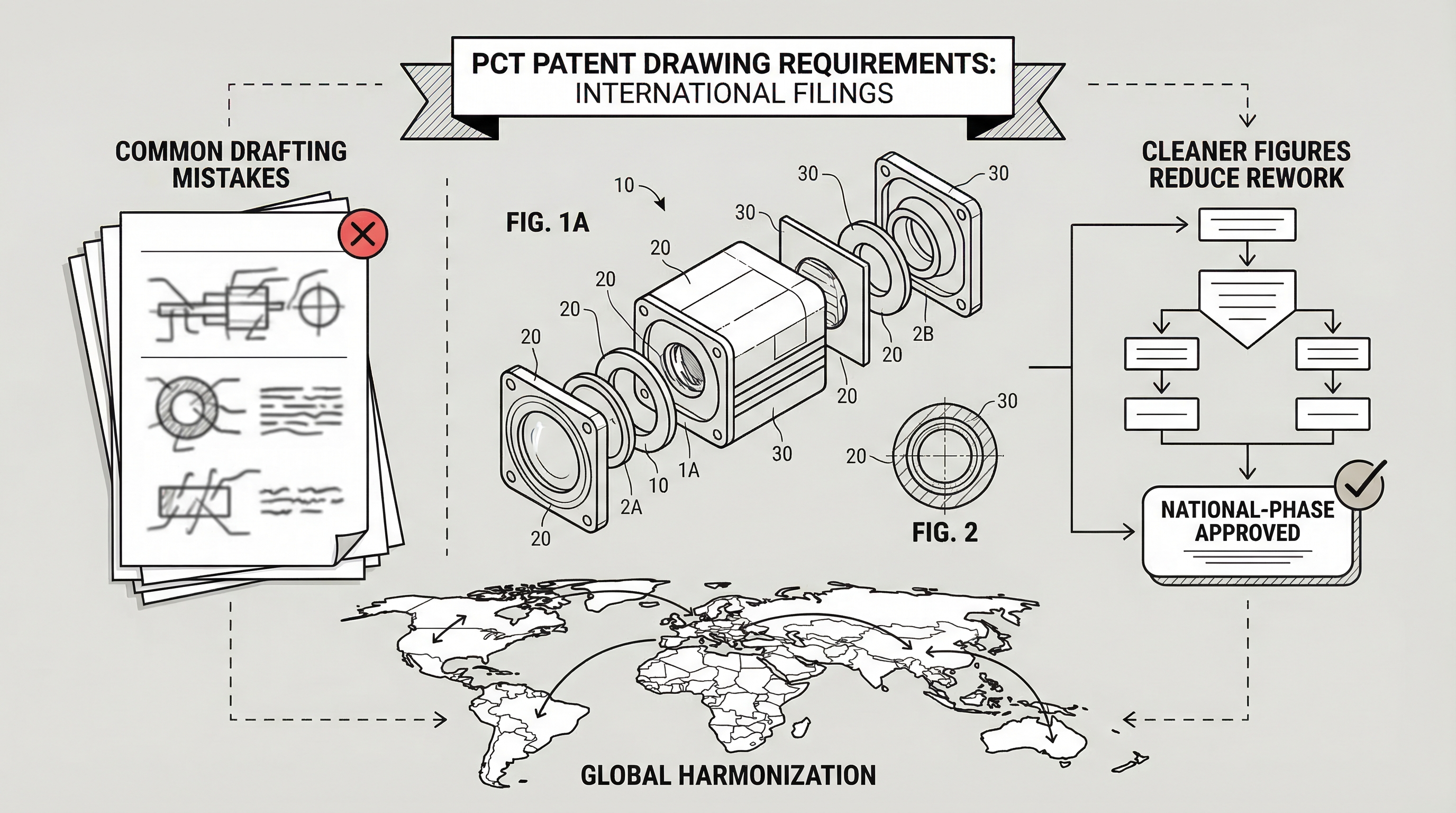
PCT Patent Drawing Requirements 2026: International Filing Guide
Why weak PCT figures cost you 3x in national phase. Complete PCT and WIPO drawing rules, conservative drafting choices, and reusable figure workflows. 2026.
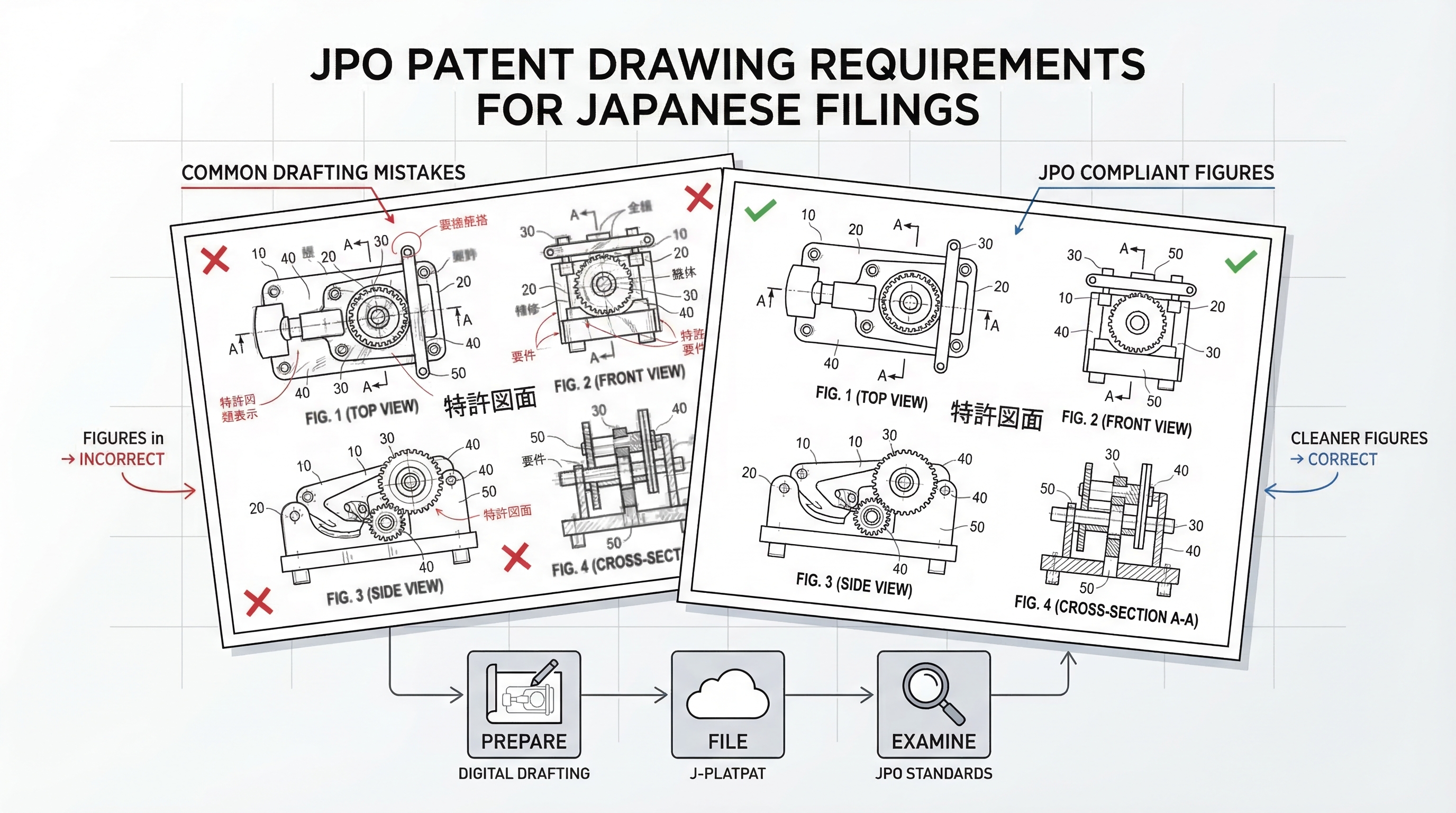
JPO Patent Drawing Requirements 2026: Complete Guide for Japanese Filings
JPO drawing rules, multi-view consistency, and common drafting mistakes for Japanese patent filings. Get cleaner figures with less rework. 2026 guide.
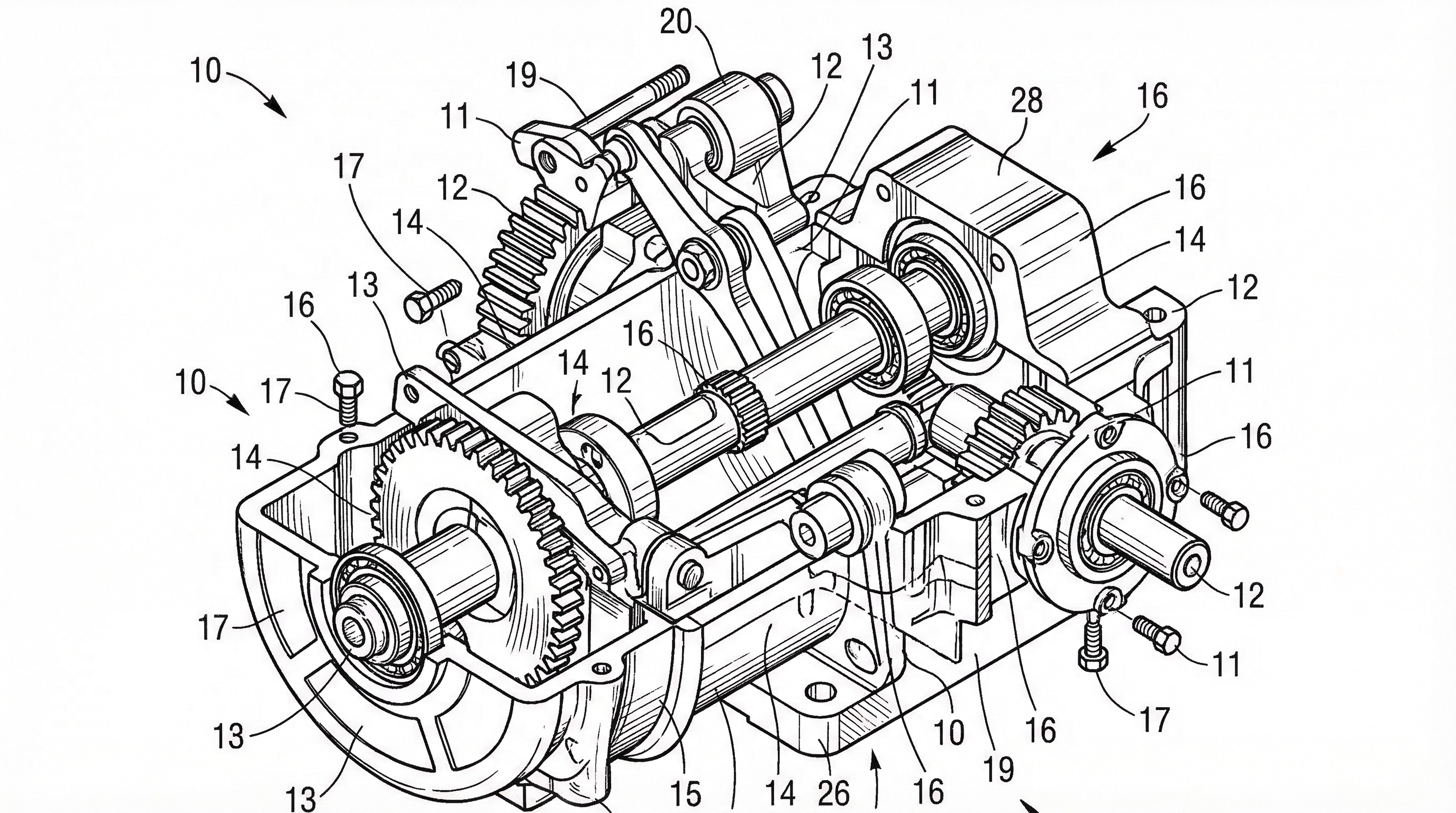
USPTO Patent Drawing Requirements 2026: Checklist, Margins & Examples
USPTO patent drawing requirements for 2026: 37 CFR 1.84 checklist, margins, line rules, reference numerals, examples, and pre-filing checks.
Newsletter
Join the community
Subscribe to our newsletter for the latest news and updates