Patent Illustrator
Hire a professional patent illustrator, or draft the figures yourself with AI? What an illustrator does, what one costs per figure, how long the work takes, how to choose one, and where PatentFig AI fits as the first-draft and check step before a professional finalizes the set.
- $25–$300 per figure to hire
- 1–10 day turnaround
- AI first drafts in minutes
- Six-office figure check
The 30-second answer
- A patent illustrator produces the formal figures for a patent application: each required view drawn to the office’s drawing rules, with reference numerals and leader lines tied to the specification, and surface shading on design patents.
- Hiring one costs $25–$300 per figure in 2026 depending on tier (budget services $25–$59, mid-market US firms $100–$125 per sheet, senior specialists $75–$300), plus $50–$100 per extra revision round and one to ten working days per draft.
- PatentFig AI is the first-draft and check step: generate the figures in minutes, validate them against USPTO, EPO, CNIPA, JPO, KIPO, or PCT rules, then send only the sheets that need a professional’s polish to an illustrator (free tier, then $50/mo).
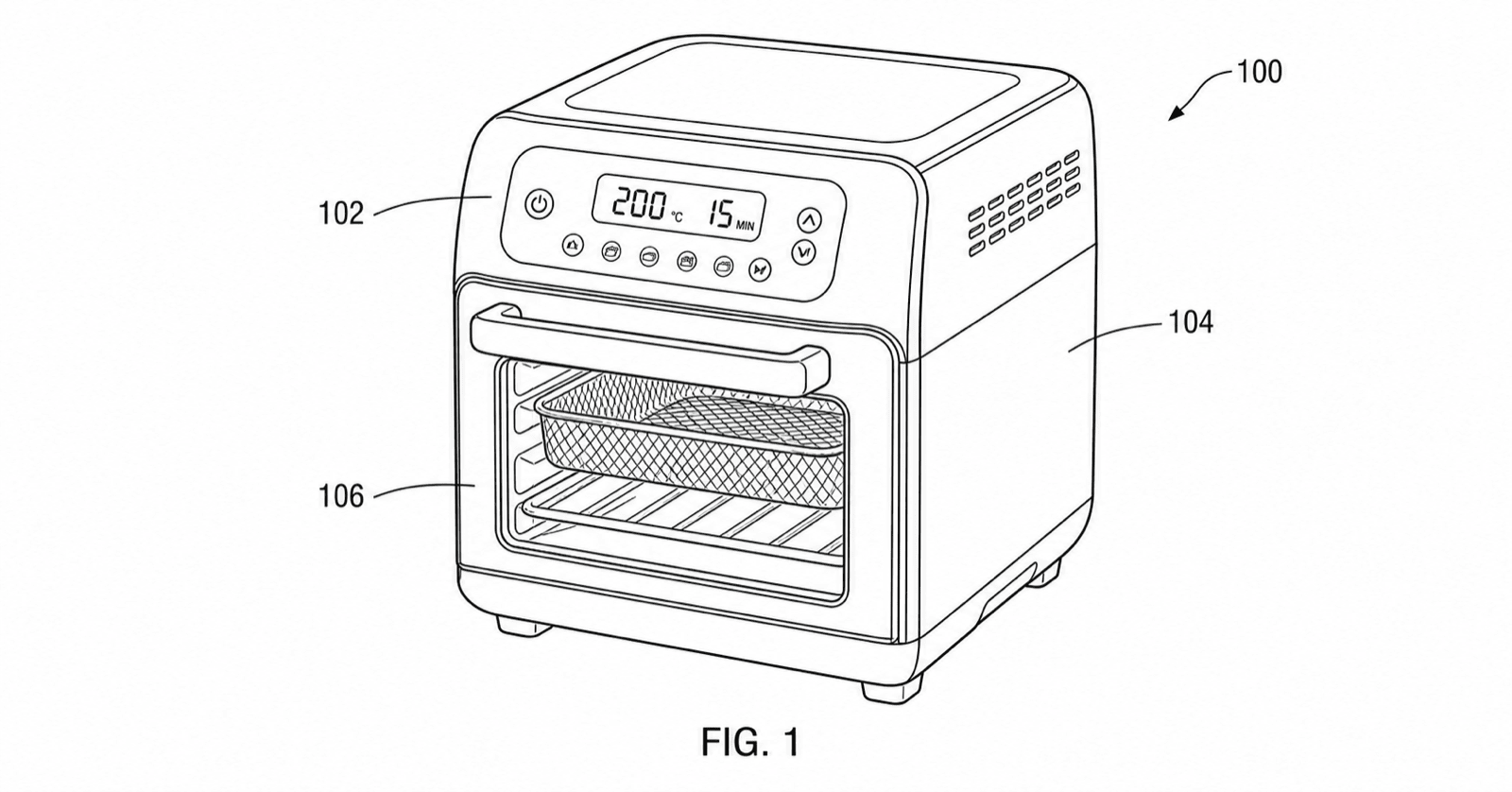
Patent illustration examples
Fictional inventions illustrated in filing style. Open one to pre-fill the generator and adapt it.
What a patent illustrator does
The job is more than drawing the invention. A patent illustrator produces figures that an examiner will accept and that support the claims.
1
Formal figures to office rules
Black-and-white line art with uniform line weight, correct margins, sheet and figure numbering, and no unnecessary text, following USPTO 37 CFR 1.84, EPO Rule 46, or the equivalent rules at CNIPA, JPO, KIPO, and PCT.
2
Reference numerals and leader lines
Every claimed element gets a numeral that matches the specification, placed once per view with a leader line that does not cross other lines or numerals.
3
The complete view set
Perspective, front, rear, side, top, and bottom views as needed, plus exploded views, cross-sections with hatching, and enlarged details where the claims demand them.
4
Surface shading for design patents
Design patents claim appearance, so the illustrator adds consistent line or stipple shading to show contour, and uses broken lines for unclaimed environment.
5
Flowcharts and block diagrams
For software and method claims: one box per step, consistent connector style, and numerals that tie each block back to the written description.
6
Corrections after an office action
If an examiner objects to a drawing, the illustrator produces replacement sheets. Ask up front what a post-objection correction costs.
How much a patent illustrator costs
Published 2026 rates from the drawing services and freelance illustrators tracked on our patent drawing cost page. Rates are per figure or per sheet; most quotes exclude rush and extra revisions.
Budget and offshore services: $25–$59 per figure
Standard utility line art from a sketch or photo. Check office coverage and revision terms carefully at this tier.
Mid-market US firms: $100–$125 per sheet
Experienced illustrators working from CAD, photos, or sketches, usually with one or two revision rounds included.
Senior specialists: $75–$300 per figure
Complex mechanical assemblies, medical devices, and litigation-grade exhibits where view selection and detail matter.
Revisions: $50–$100 per extra round
One or two minor rounds are usually included. Round three onward, or changes after the specification moves, bill separately.
Rush delivery: add 20–50%
Standard turnaround is one to ten working days. Rush terms compress that to 24–48 hours at a premium.
Full utility set: $300–$2,000
A typical utility application needs 5–10 figures. A design patent set of 6–7 consistent views lands at $600–$875 at mid-market sheet rates.
When to hire an illustrator vs. use software
The honest split. Neither option covers every figure in every filing, and most teams use both.
Hire: complex design-patent shading sets
Six or more shaded views that must agree surface for surface are still where a professional illustrator earns the fee.
Hire: litigation-grade figures
When a figure will be an exhibit or supports a contested claim, choosing the most persuasive view is a judgment call, not a generation task.
Hire: attorney-mandated vendors
Some firms require an approved illustrator for final sheets. Software still saves money on the drafts that feed that vendor.
Software: first drafts and provisionals
A provisional needs figures that support the disclosure, not formal sheets. Draft them in minutes and refine over the 12-month window.
Software: flowcharts and block diagrams
Method and system figures are structural, not artistic. Generate them from the claim steps and keep the numerals consistent automatically.
Software: revisions and tight budgets
Independent inventors and small teams get unlimited iteration on a flat subscription instead of a per-figure, per-round meter.
AI first draft to illustrator finalization: the workflow
How filing teams combine PatentFig AI with a hired illustrator so the professional bill covers only the figures that need it.
1. Generate the draft set
Describe the invention or upload a sketch, photo, screenshot, or 3D model. Generate every view you expect to file, including flowcharts and cross-sections.
2. Lock the numerals against the specification
Edit by chat, regenerate individual slots, and fix reference numerals so the figures and the written description agree before anyone else touches them.
3. Run the figure checker and export
Validate the set against your office’s rules, then export PNG, SVG, DXF, or vector PDF at 300 or 600 DPI as the reference package.
4. Send only the hard sheets to an illustrator
Hand the illustrator the checked drafts and numeral list, and pay specialist rates only for the shaded design views or exhibit figures that need a professional finish.
How to choose a patent illustrator
Six questions to ask before you send a disclosure to anyone.
Office-rule familiarity
Ask which offices they file for regularly. USPTO, EPO, CNIPA, JPO, and KIPO differ on margins, shading, and text in figures.
Sample sheets in your category
Request recent examples of the same figure type: a shaded design set, an exploded mechanical view, or a software flowchart.
Revision policy
How many rounds are included, what a round costs after that, and what a correction costs if an examiner objects.
File formats
You should receive TIFF or PDF at filing resolution, and DXF or another editable vector source so the figures can be revised later without redrawing.
Confidentiality and NDA
Get a signed NDA before sending the disclosure, and ask whether subcontractors or offshore staff will see it.
Turnaround and rush terms
Confirm standard delivery in working days, the rush premium, and whether revision rounds reset the clock.
Hired patent illustrator vs. PatentFig AI
A side-by-side on the terms that decide the choice. The two are complements more often than substitutes.
Hired patent illustrator
PatentFig AI
Turnaround
One to ten working days per draft; rush delivery adds 20–50%
Minutes per figure; revisions are immediate
Cost
$25–$300 per figure; $300–$2,000 for a full utility set
Free tier, then $50/mo on a subscription with credits
Revisions
One or two rounds included, then $50–$100 per round
Chat edits and slot-by-slot regeneration, no per-round fee
Office-rule check
Relies on the illustrator’s experience; ask which offices they file for
Automated checker for USPTO, EPO, CNIPA, JPO, KIPO, and PCT rules
Judgment on hard figures
Chooses the most persuasive view; hand-finishes design-patent shading
Generates what you describe; complex shaded design sets still benefit from a professional pass
Confidentiality
Covered by the illustrator’s NDA; ask about subcontractors and offshore staff
Prompts, uploads, and figures are never used to train models; encrypted in transit and at rest; NDA and DPA available
Best for
Shaded design-patent view sets, litigation exhibits, attorney-mandated vendors, full hand-off
First drafts, provisionals, flowcharts and block diagrams, revision-heavy sets, budget filings
Use software (PatentFig AI) when
- You need first drafts today to lock the specification and reference numerals
- The filing is a provisional application with a 12-month window to refine the figures
- The set is mostly flowcharts, block diagrams, or standard utility views
- Figures will go through several revision rounds and per-round fees would add up
- You are an independent inventor or small team working to a fixed budget
Hire a patent illustrator when
- A design patent needs a fully shaded view set where every surface must read consistently across six or more views
- The figures are litigation-grade exhibits or support a contested claim, where choosing the view is a judgment call
- Your attorney or firm mandates a specific illustration vendor
- You want to hand off the entire set and never touch the workflow
Patent illustrator
Patent illustrator FAQ
Draft the figures first, then decide what to hand off
Generate a checked first draft in minutes, and pay illustrator rates only for the sheets that need a professional finish.
Related tools and guides
Patent drawing software
The full PatentFig workspace for filing-ready figure sets.
Patent drawing examples
Browse sample patent figures across every category.
Figure checker
Validate figures against office rules before filing.
Detailed guide
Read the related workflow article on the blog.
Illustration services vs. software
Compare hiring an illustrator with AI software.
Provisional patent drawings
Drawings for provisional patent applications.