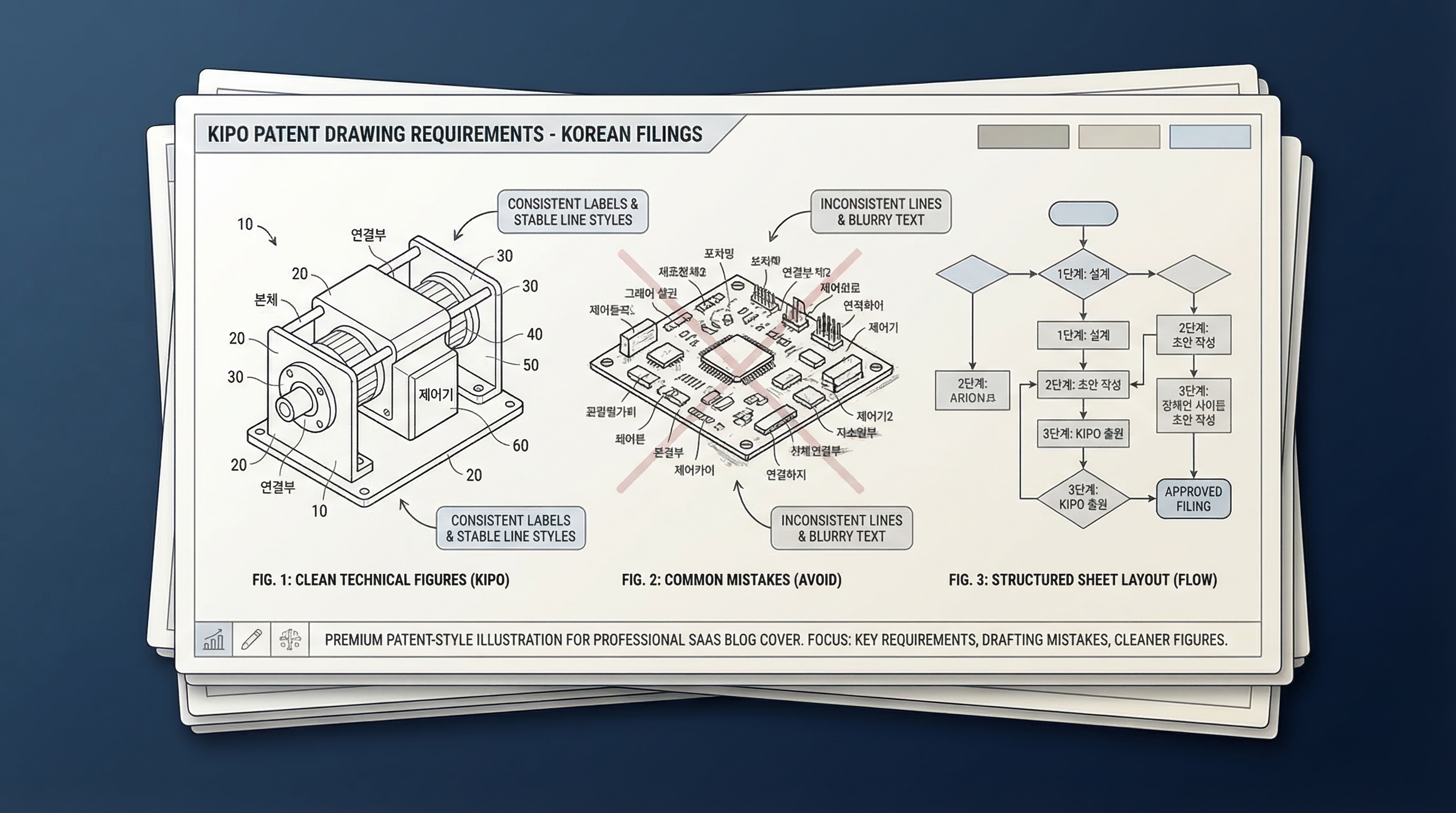
KIPO Patent Drawing Requirements 2026: Korean Filing Checklist & Examples
KIPO patent drawing requirements for 2026: A4 setup, margins, labels, reference numerals, Korean filing checks, and examples for patent teams.
TL;DR: KIPO drawings go on A4 sheets with margins aligned to international practice (2.5 cm top, 2.5 cm left, 1.5 cm right, 1.0 cm bottom), black-and-white line art by default, and Arabic reference numerals at least 3.2 mm tall — color is accepted only when essential to the disclosure. Figure sets reused from JPO or USPTO filings usually pass on substance but fail on consistency: numbering drift and mixed figure styles are the defects that surface fastest in Korean review.
KIPO Patent Drawing Requirements for Korean Filings
Korean patent drawing workflows benefit from the same fundamentals that make any strong patent figure set effective: clarity, consistent labeling, and disciplined visual structure. The difference is that when a figure set is reused across jurisdictions, weak internal consistency often shows up fastest in the local filing workflow.
That is why KIPO-oriented preparation deserves its own review pass rather than being treated as a footnote to another office.
For a broader cross-office overview, start with the Patent Drawing Requirements by Office guide.
If the drawing set still needs to be created or revised, compare the office-by-office drawing standards with the patent drawing software workflow before sending figures to Korean counsel.
The Baseline for KIPO-Ready Figures
In practice, Korean filing teams should prioritize:
- Clean black-and-white technical line work
- Readable labeling and numbering
- Figure sets that remain consistent across all related pages
- Diagrams that look like patent disclosures, not investor decks or UI mockups
These priorities apply whether you are drafting mechanical product figures, system block diagrams, or process-oriented disclosures.
Common Drafting Mistakes
The most frequent quality issues are usually operational, not conceptual:
- Mixed figure styles: Different pages look like they came from different drafting processes
- Overloaded system diagrams: Too many modules, arrows, and labels are forced into one page
- Numbering drift: The same component is labeled differently across views
- Weak line clarity: The figures are technically present, but visually noisy or hard to follow
These issues create unnecessary cleanup cycles, especially when a team is preparing the same invention for multiple offices at once.
Why Consistency Matters Across the Full Set
For KIPO-ready production, the drawing set should behave like one coordinated disclosure. If a component appears in the overview figure, detailed view, and sectional or exploded figure, the reader should be able to track it without friction.
That requires:
- Stable reference numerals
- Predictable line emphasis
- Clear figure sequencing
- Careful splitting of crowded content into additional figures when needed
The more complex the invention, the more important this consistency becomes.
How PatentFig AI Supports Korean Filing Workflows
PatentFig AI helps teams convert rough sources into cleaner patent-oriented figures by standardizing presentation earlier in the workflow. Instead of waiting until the final drafting pass to solve consistency issues, teams can build figure discipline into the first round of generation and revision.
That is especially helpful when the source material starts as:
- CAD screenshots
- annotated product renders
- rough system sketches
- text-only process descriptions
Related Office Guides
If your Korean filing work sits inside a broader international program, also review:
Create Patent Figures Faster
Ready to turn rough sketches, CAD screenshots, or prompts into patent-ready visuals? Open the PatentFig AI generator.
Next step: Run your figures through the free figure checker before you file — it validates margins, line weight, DPI, and numerals against your target office. Or review the patent drawing requirements summary.
Author

Categories
More Posts
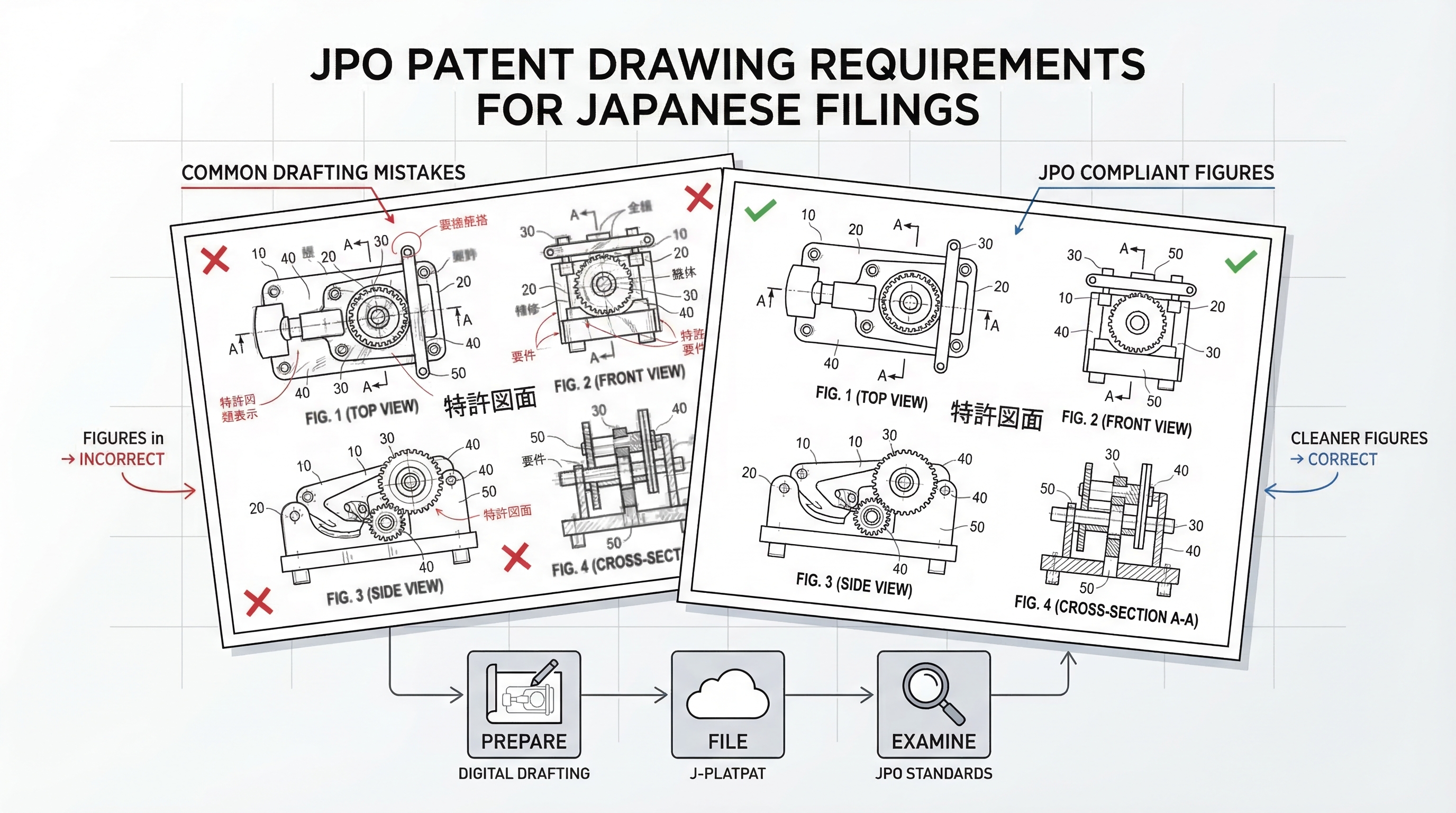
JPO Patent Drawing Requirements 2026: Complete Guide for Japanese Filings
JPO drawing rules, multi-view consistency, and common drafting mistakes for Japanese patent filings. Get cleaner figures with less rework. 2026 guide.
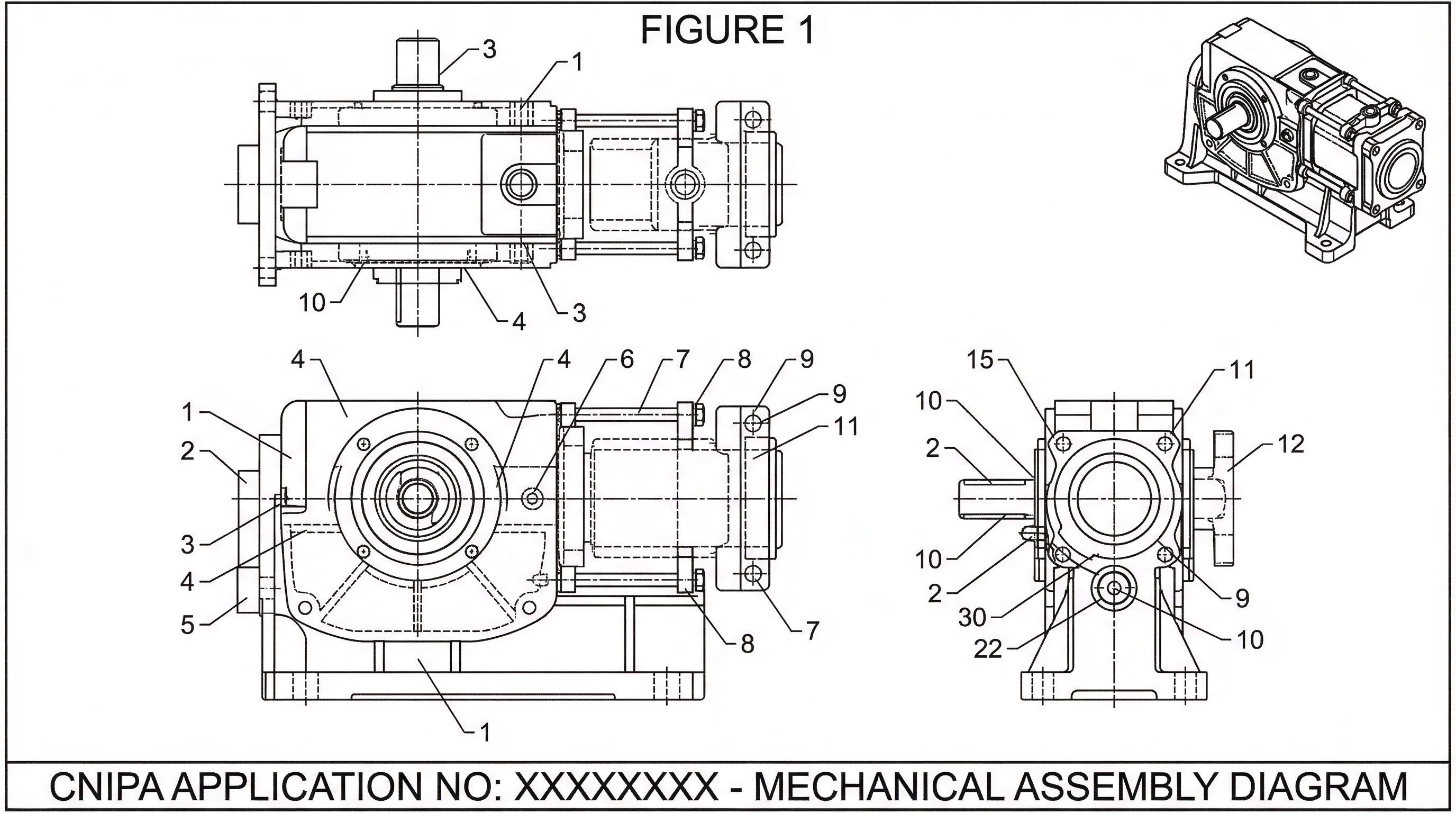
CNIPA Patent Drawing Standards 2026: China Filing Checklist & Examples
CNIPA patent drawing standards for 2026: A4 margins, black-and-white line rules, reference numerals, shading limits, and examples for China filings.
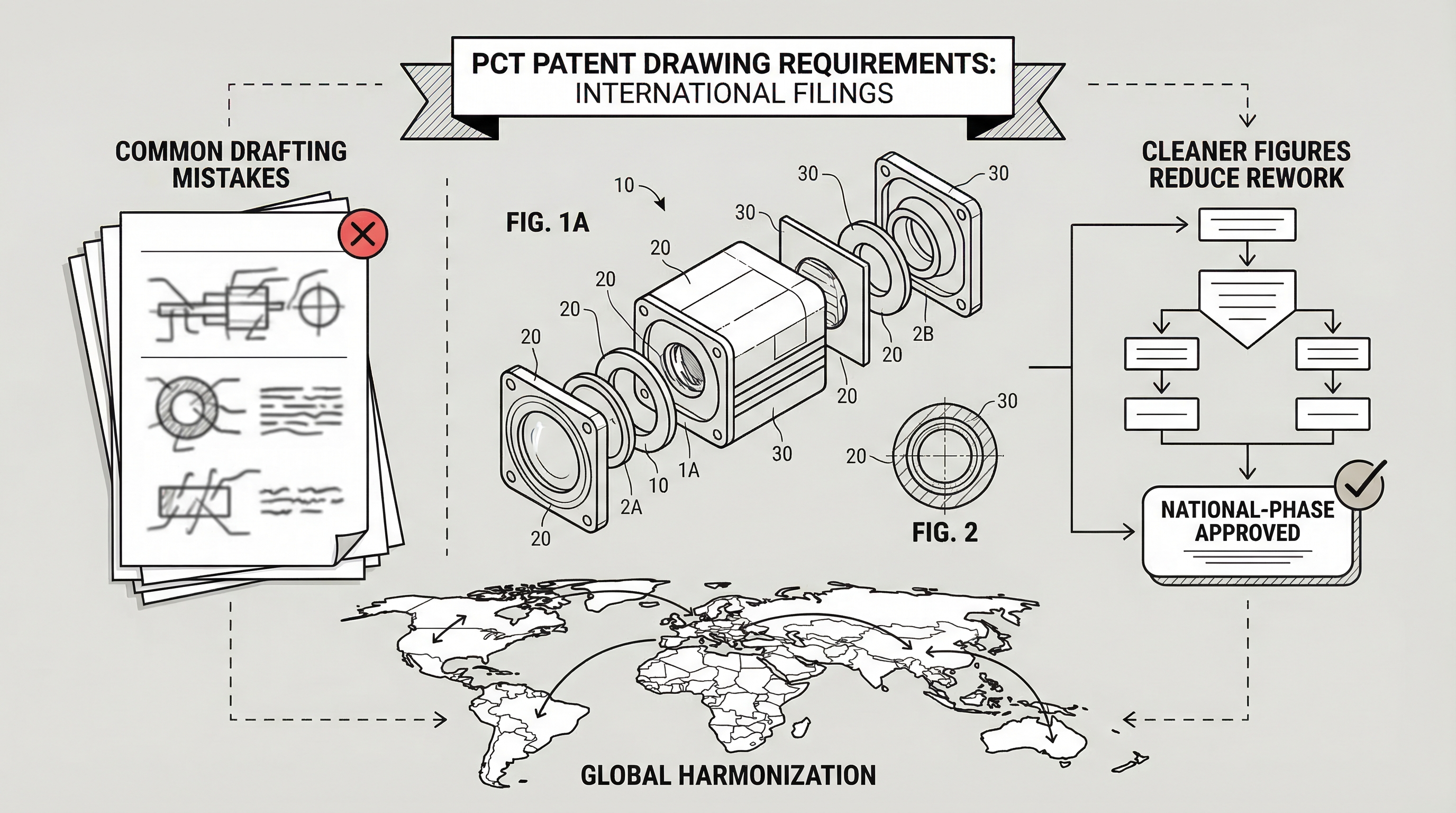
PCT Patent Drawing Requirements 2026: International Filing Guide
Why weak PCT figures cost you 3x in national phase. Complete PCT and WIPO drawing rules, conservative drafting choices, and reusable figure workflows. 2026.
Newsletter
Join the community
Subscribe to our newsletter for the latest news and updates