JPO Patent Drawing Requirements 2026: Complete Guide for Japanese Filings
JPO drawing rules, multi-view consistency, and common drafting mistakes for Japanese patent filings. Get cleaner figures with less rework. 2026 guide.
TL;DR: JPO filings reward control over flourish: uniform black-and-white line quality, multi-view geometry that stays proportionally consistent (a side view must match what the front view implies), compact restrained labels, and deliberate figure sequencing. Design-related filings deserve the strictest multi-view review, and a globally drafted figure set almost always needs a Japan-specific consistency pass before it is filing-ready.
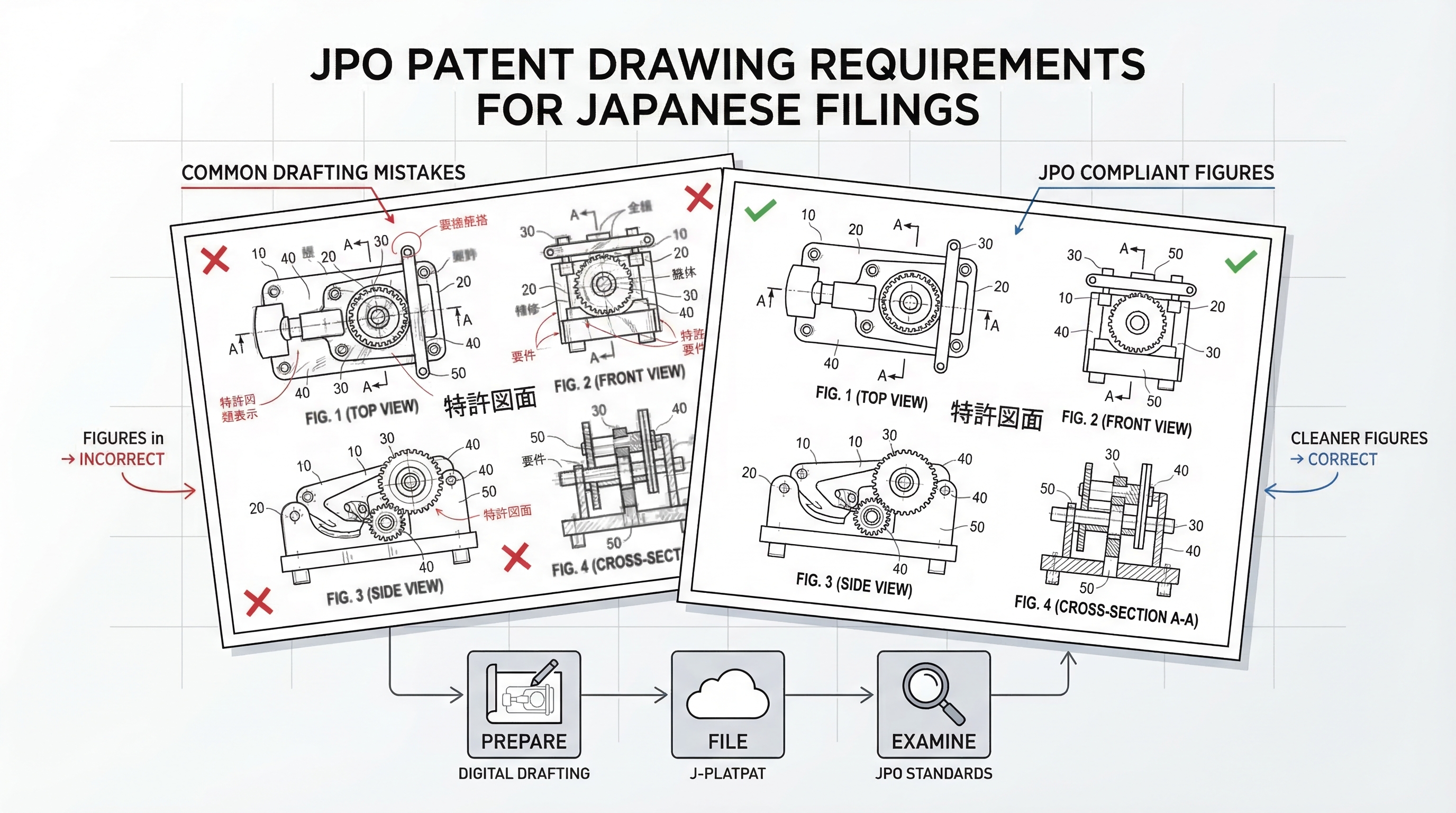
JPO Patent Drawing Requirements for Japanese Filings
Japanese patent drawing preparation is often less about visual flourish and more about control. Clean figure hierarchy, stable multi-view consistency, and disciplined labels make a filing easier to review and easier to maintain when the portfolio grows.
For teams filing in Japan, that means the drawing set should be treated as part of the legal communication layer, not just as a visual appendix.
Need the full office map? Compare all major filing paths in the Patent Drawing Requirements by Office guide.
What Matters Most in a JPO-Oriented Figure Set
While every patent office wants readable drawings, Japanese filing workflows benefit especially from structured, low-noise technical presentation. In practice, the strongest JPO-ready figure sets usually have:
- Uniform black-and-white line quality
- Stable correspondence between all related views
- Compact and readable labels
- A figure sequence that feels deliberate rather than improvised
This is particularly important when one invention includes both product views and procedural or system-style figures.
Where Teams Commonly Lose Quality
The most common drafting failures are not dramatic. They are usually cumulative:
- A side view drifts slightly from the proportions implied by the front view
- Labels become inconsistent across later pages
- A system diagram starts to look like a presentation slide instead of a patent figure
- A design-oriented figure set mixes line styles from different drafting stages
None of these problems is fatal by itself, but together they weaken the filing package and increase review friction.
Design and Multi-View Work Deserve Extra Attention
Japanese filing programs often involve products or structures where view integrity matters heavily. If one angle implies a contour or edge condition that is not supported in the related figures, the entire set becomes harder to trust.
That is why JPO-oriented review should include:
- View-to-view geometry checks
- Consistent treatment of recurring components
- Stable line emphasis across the full figure set
- Controlled use of labels and numbering
This is true for both classic product filings and figure-heavy utility applications.
How PatentFig AI Helps
PatentFig AI reduces manual cleanup by treating drawings as a coordinated set instead of isolated outputs. That means teams can:
- Generate cleaner line art from reference images or CAD screenshots
- Maintain stronger consistency across multiple views
- Standardize labeling and figure presentation
- Reduce the gap between source material and filing-ready patent figures
For teams running multi-jurisdiction portfolios, this is especially useful because Japanese filing work rarely exists in isolation. It usually sits beside US, China, Europe, or Korea in the same production stream.
Related Office Guides
For adjacent filing paths, compare this guide with:
Create Patent Figures Faster
Ready to turn rough sketches, CAD screenshots, or prompts into patent-ready visuals? Open the PatentFig AI generator.
Next step: Run your figures through the free figure checker before you file — it validates margins, line weight, DPI, and numerals against your target office. Or review the patent drawing requirements summary.
Author

Categories
More Posts
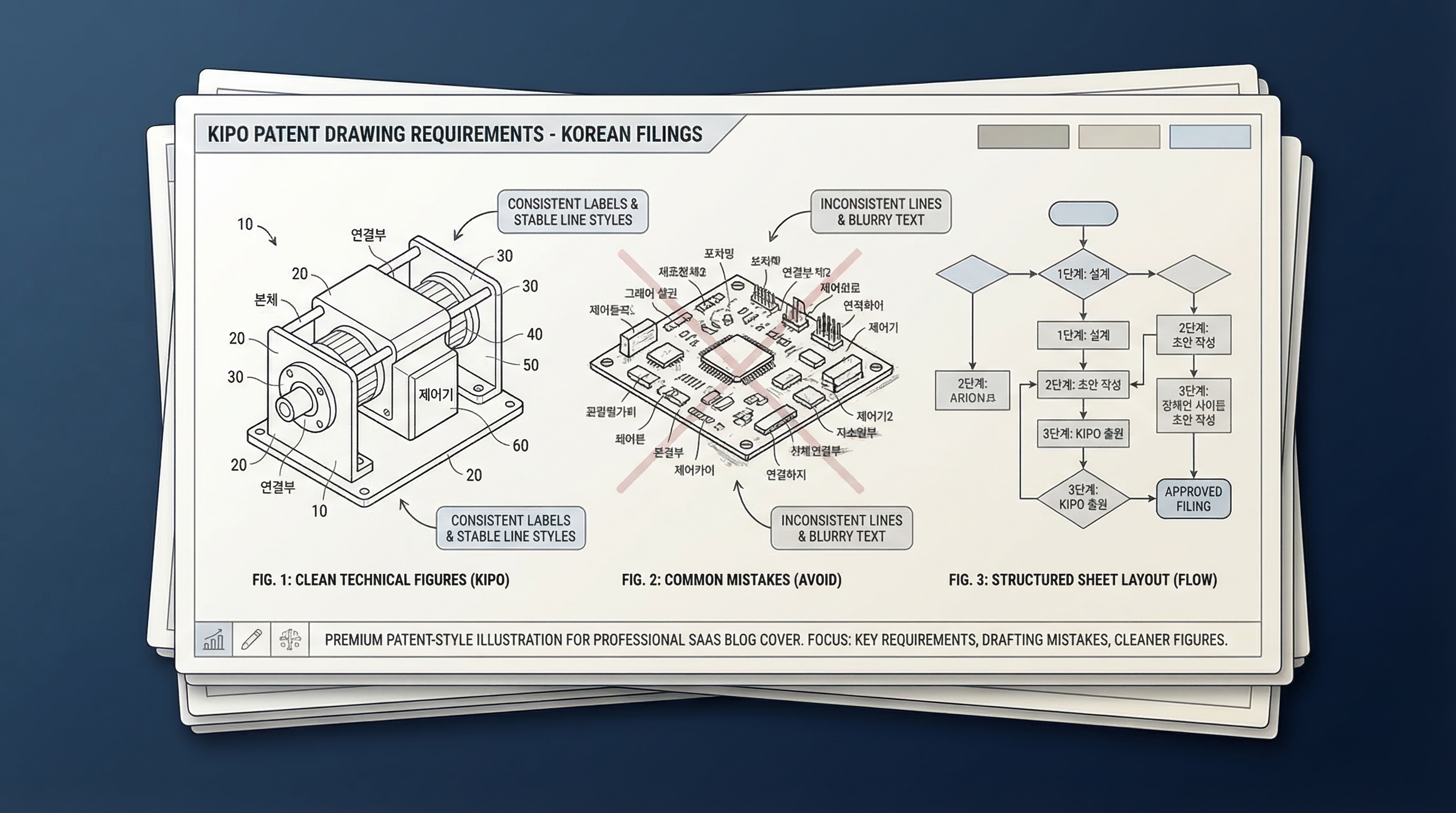
KIPO Patent Drawing Requirements 2026: Korean Filing Checklist & Examples
KIPO patent drawing requirements for 2026: A4 setup, margins, labels, reference numerals, Korean filing checks, and examples for patent teams.
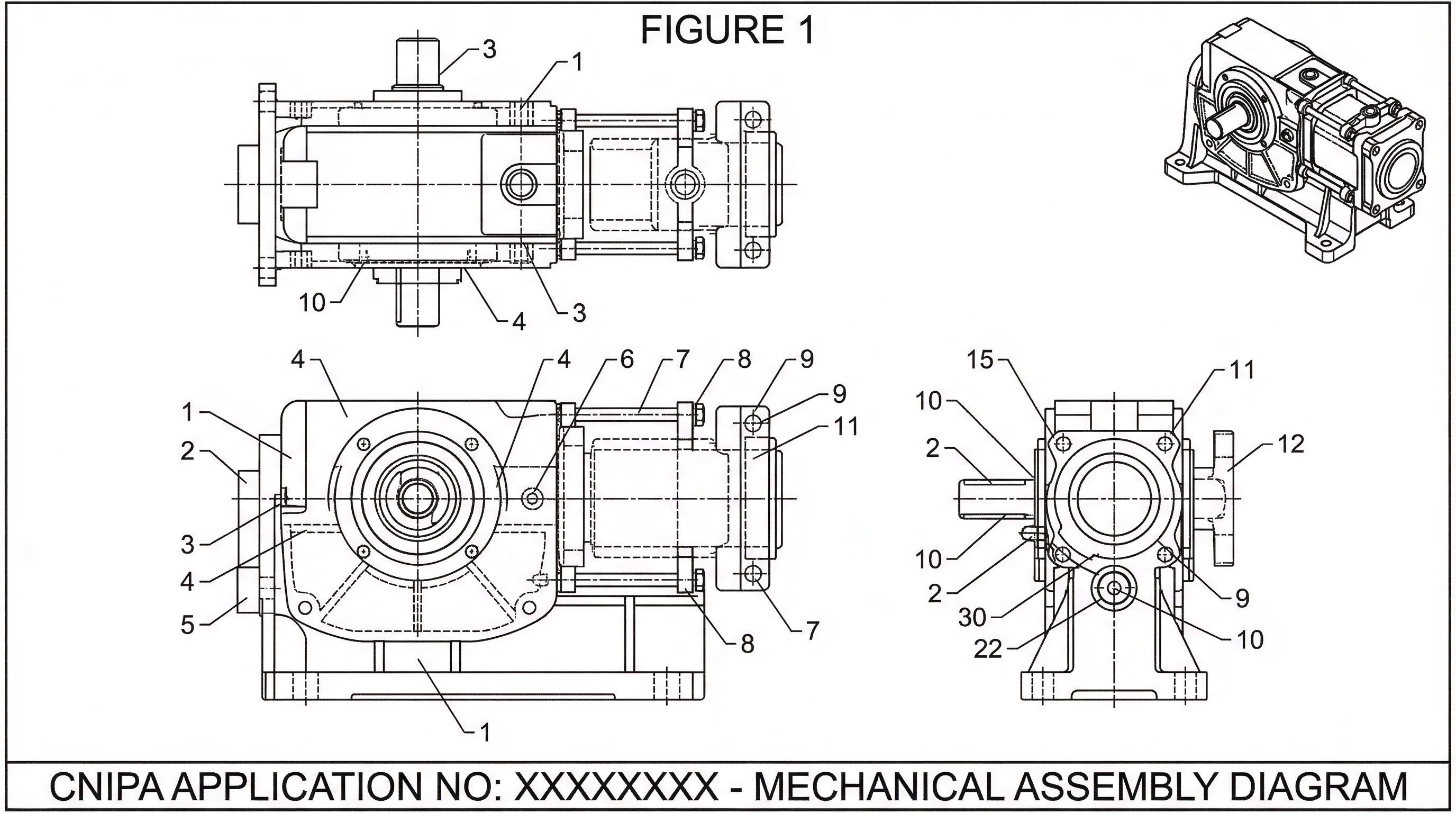
CNIPA Patent Drawing Standards 2026: China Filing Checklist & Examples
CNIPA patent drawing standards for 2026: A4 margins, black-and-white line rules, reference numerals, shading limits, and examples for China filings.
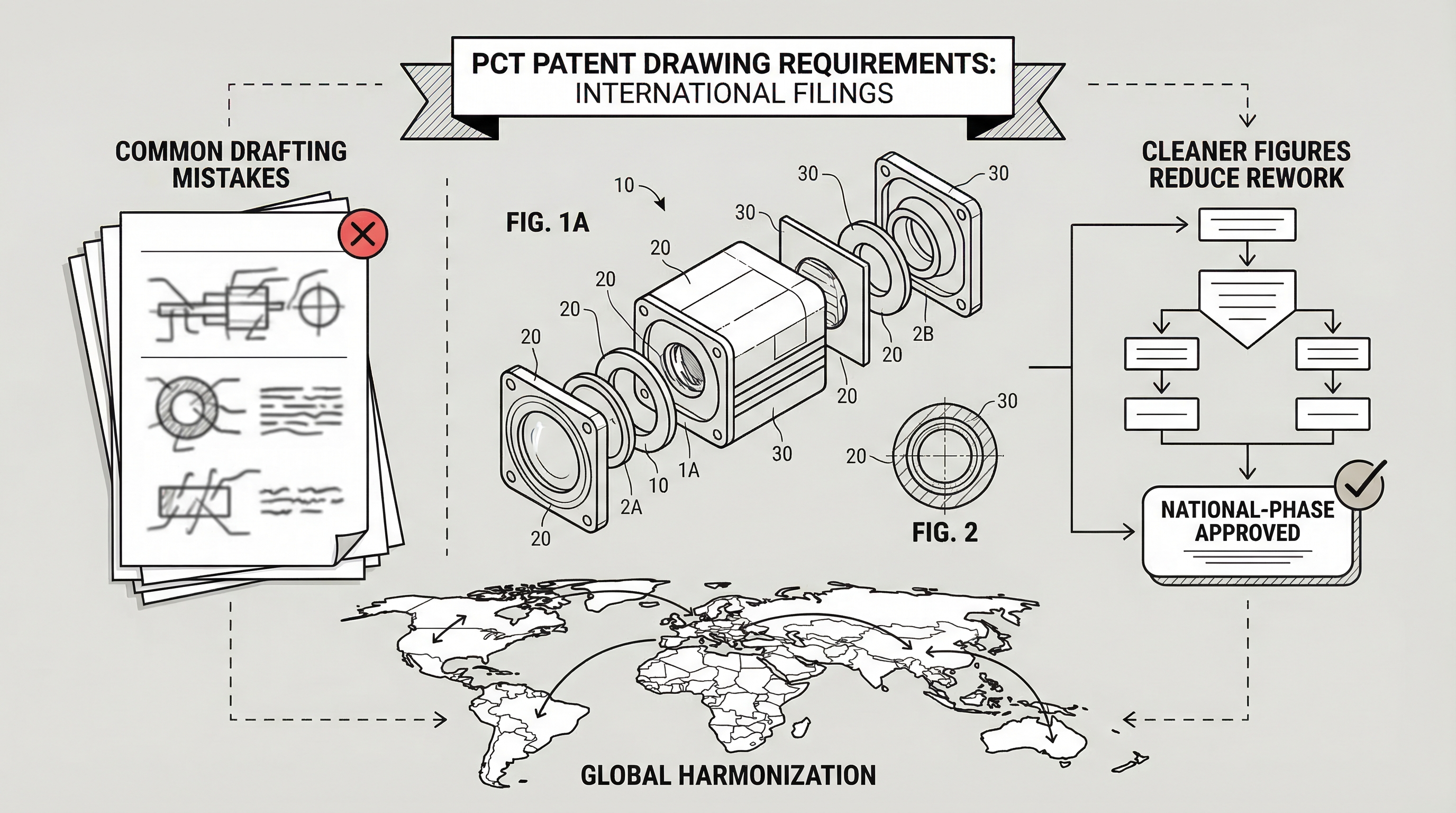
PCT Patent Drawing Requirements 2026: International Filing Guide
Why weak PCT figures cost you 3x in national phase. Complete PCT and WIPO drawing rules, conservative drafting choices, and reusable figure workflows. 2026.
Newsletter
Join the community
Subscribe to our newsletter for the latest news and updates