Are Patent Drawings Public Domain? How to Find, Download & Read Famous Patent Figures (2026)
Are patent drawings copyrighted or public domain? Learn the 37 CFR 1.71(d)–(e) rule, where to download high-res USPTO and Google Patent drawings, and what Edison, Lewis Latimer, Tesla, LEGO, and Apple figures teach modern filers.
TL;DR: Published US patent office drawings are almost always public domain patent drawings as documents: under 37 CFR 1.71(d)–(e), anyone may copy and reproduce published patent drawing sheets unless the specification opens with an explicit statutory copyright or mask-work notice (and provided you respect separate trademark or trade-dress rights). Studying famous patent drawings — from Thomas Edison and Lewis Latimer to Nikola Tesla, LEGO, and modern Apple patent drawings — is also one of the fastest ways to master clean line craft before drafting your own figures in PatentFig AI.
Are Patent Drawings Copyrighted or Public Domain? The 37 CFR 1.71 Rule
Inventors, technical writers, educators, and attorneys ask the same two questions every week: are patent drawings copyrighted, and are patent drawings public domain once published?
In the United States, the governing rule sits in 37 CFR 1.71(d) and (e) (explained in MPEP 608.01(v)):
- General public reproduction rule: A patent is a public bargain — disclosure in exchange for a limited-term monopoly. Because the public must be free to read, cite, copy, and share the patent document itself, USPTO policy treats published US patent specifications and us patent office drawings as open to unrestricted reproduction unless a specific reservation notice is included.
- The narrow 37 CFR 1.71(e) exception: If an application includes material subject to copyright or semiconductor mask-work protection (for example, literal GUI artwork, microcode listings, or artistic patterns), the applicant may insert a prescribed waiver paragraph right at the beginning of the specification stating that the copyright owner has no objection to facsimile reproduction of the patent document as it appears in USPTO files, “but otherwise reserves all copyright rights whatsoever.” Without that explicit notice, you can treat published USPTO sheets as copyright free patent drawings for documentary, educational, prior-art, and editorial reproduction.
- Patent rights and trade dress are separate from document copyright: Copying a drawing sheet onto a slide deck is completely different from manufacturing the patented article while the patent is still in force, or selling merchandise bearing protected trade dress (such as recognizable Apple patent drawings or LEGO patent drawings silhouettes paired with registered brand marks). Even with expired patent drawings or old patent drawings, always separate the public-domain drawing sheet from active trademarks.
How to Find and Download High-Resolution Patent Drawings
If you are researching prior art, checking how competitors illustrate a mechanism, or looking up historical patent drawings, knowing where to find patent drawings determines whether you get blurry screenshots or crisp 300 DPI archival sheets.
| Source | Best for | File format & resolution | Practical tip when you download patent drawings |
|---|---|---|---|
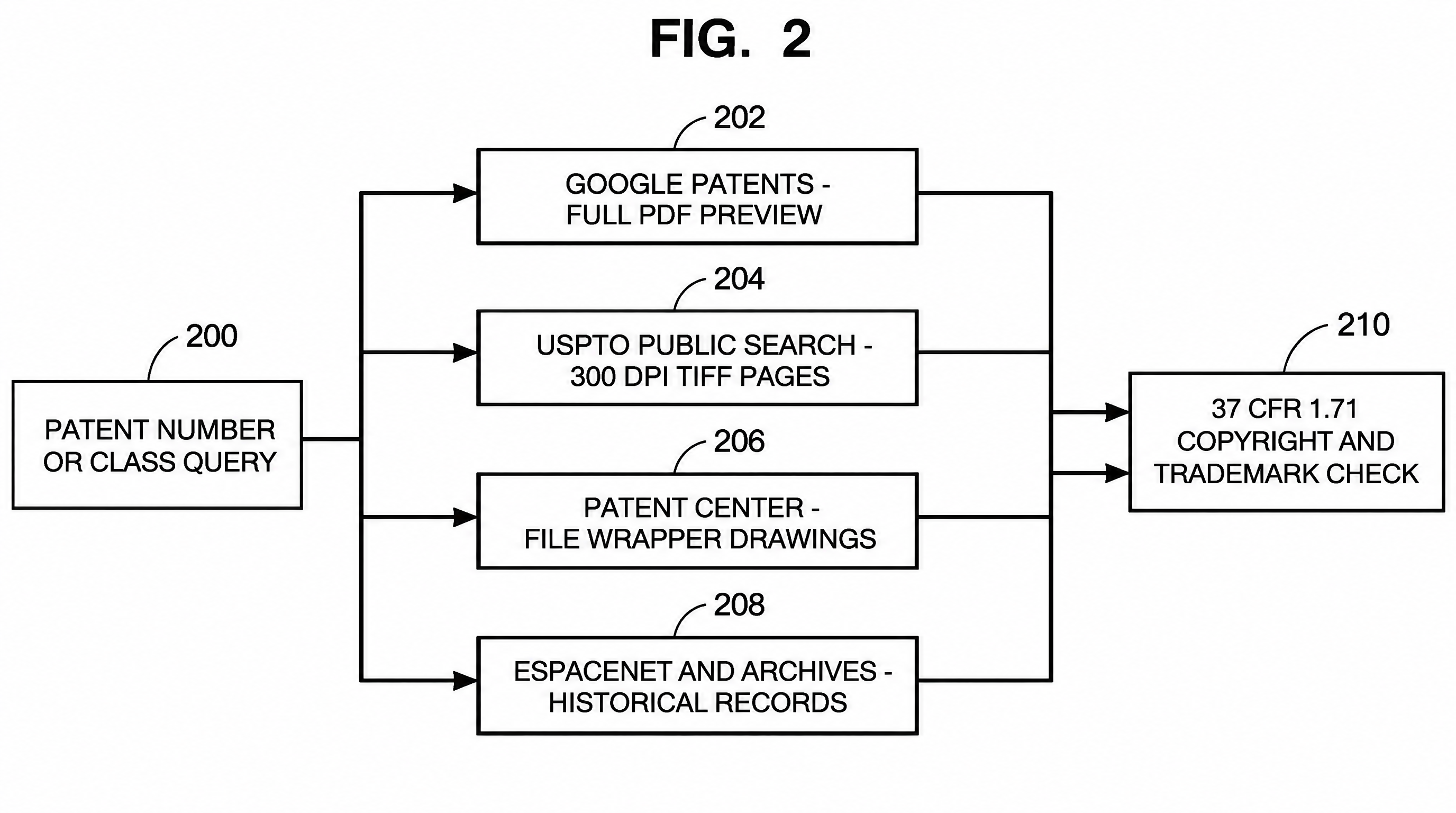
Google Patents (patents.google.com) | Fastest keyword, assignee, and citation lookup (google patent drawings) | Full multi-page PDF + individual figure thumbnails | Click Download PDF rather than right-clicking the web carousel preview, which downsamples fine cross-hatching. |
| USPTO Patent Public Search | Cleanest individual sheet extraction for US grants and publications | Archival 300 DPI black-and-white TIFF / PDF per sheet | Switch to the image viewer mode (Images toggle) to inspect exact line weights and margin spacing sheet by sheet. |
| USPTO Patent Center | Seeing original vs. corrected REPLACEMENT SHEET filings | Raw file-wrapper PDFs (DRW, DRW.NONBW) | Open the Documents & Transactions tab on any application number to compare rejected informal figures against accepted formal sheets. |
| Espacenet & US National Archives | International filings (EPO/PCT/CNIPA/JPO) and how to find old patent drawings | Multi-page PDF and high-res archival scans | For 19th-century vintage patent drawings (including restored X-Patents lost in the 1836 Patent Office fire), search the National Archives catalog alongside USPTO’s USOCR collection. |
Four Famous Patent Drawings — and What Modern Filers Can Steal from Them
Looking up famous patent drawings is more than Patent Office trivia. Every enduring example solved a visual disclosure problem that examiners still scrutinize under patent drawing requirements today.
1. Thomas Edison and Lewis Latimer — Electric Lamp Craftsmanship
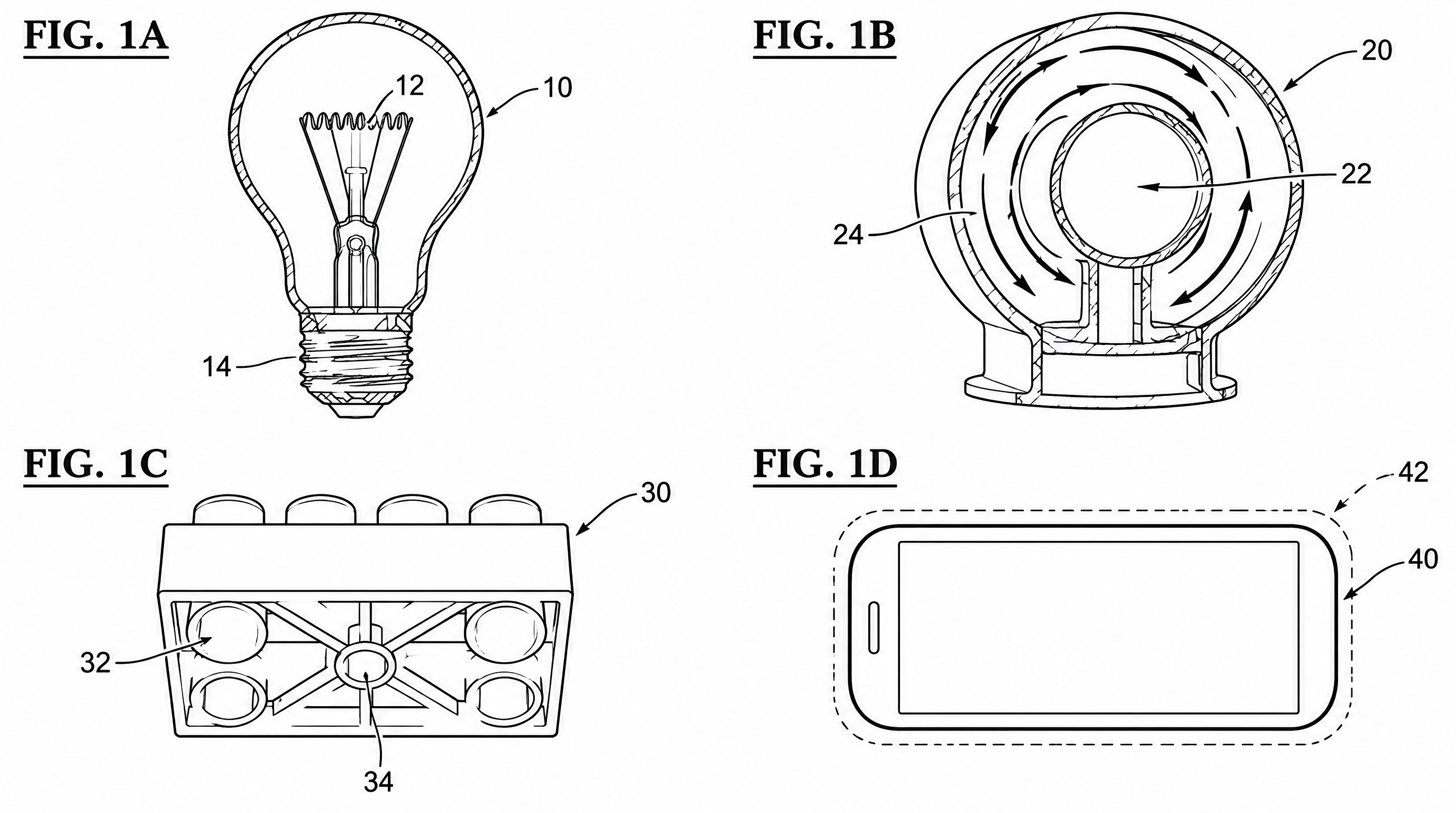
When people search thomas edison patent drawings (such as US 223,898 for the incandescent electric lamp) or lewis latimer patent drawings (including Latimer’s own carbon-filament manufacturing patent US 252,386 and his celebrated drafting work on Bell’s telephone and Maxim/Edison lamp filings), the first thing that jumps off the page is stroke discipline.
Lewis Latimer understood as a master patent illustrator that glass bulbs, metal clamps, vacuum seals, and delicate filaments look identical in flat outline unless material cross-hatching and ruled surface shading separate them. Notice how every reference letter sits in clean white space outside the glass envelope, connected by short, decisive lead lines that never cross a thin filament stroke.
2. Nikola Tesla’s Bladeless Turbine (US 1,061,206) — Mechanical Cutaway Clarity
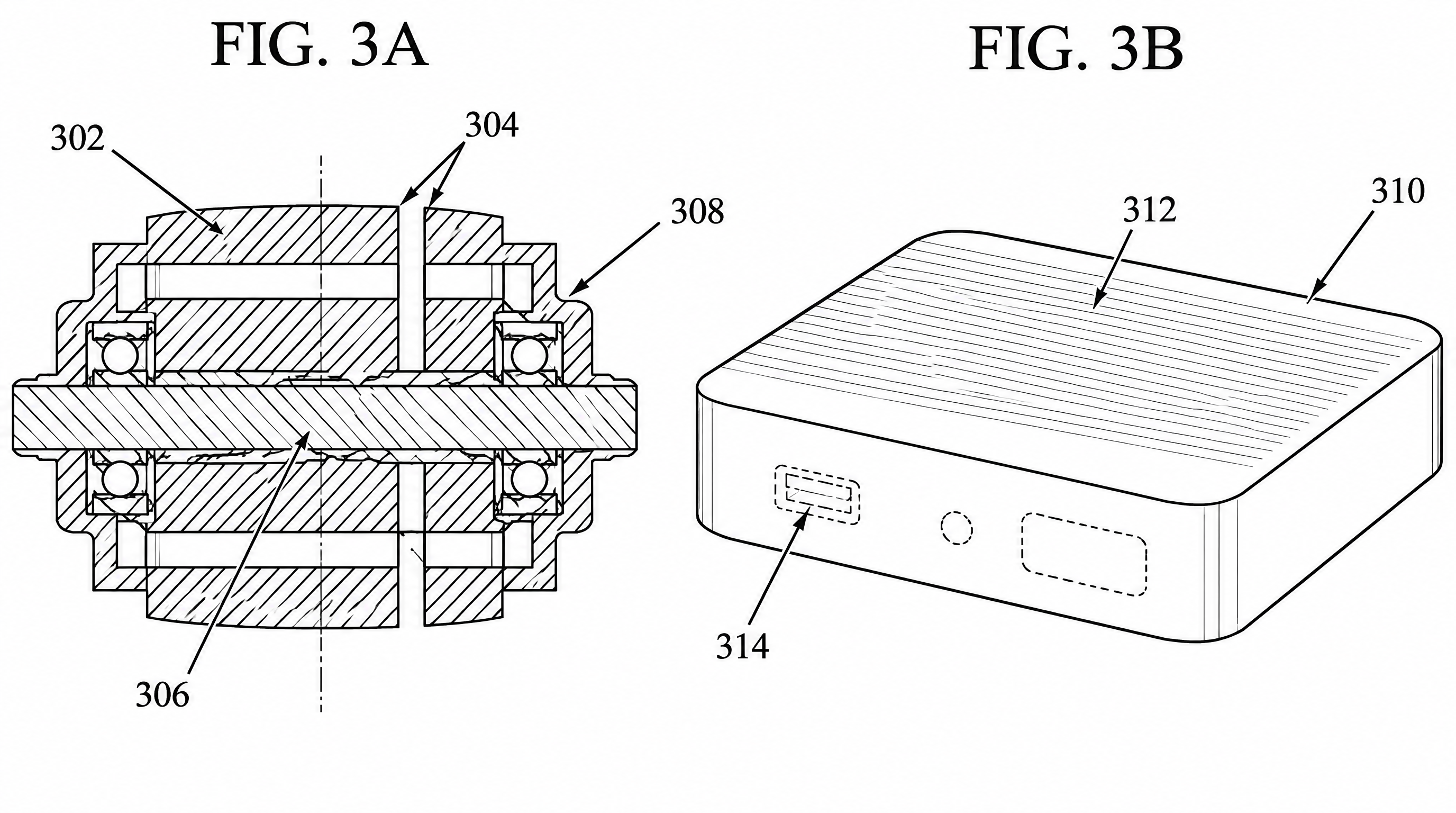
Search nikola tesla patent drawings or tesla turbine patent drawings and examine US 1,061,206 (granted 1913). Tesla’s bladeless boundary-layer turbine relies on fluid spiraling inward between closely spaced parallel discs toward central exhaust ports — an invisible internal flow path if drawn only from the outside.
The figure set solves this with paired orthogonal views: an axial partial cutaway exposing rotor disc spacing alongside a transverse section showing spiral flow arrows and star-shaped central openings. Modern mechanical filers face the exact same challenge: whenever functional novelty lives inside a housing, pair an external perspective view with an axial cross-section.
3. The LEGO Interlocking Brick (US 3,005,282) — Proving Geometry Through Bottom Views
Why are lego patent drawings in Godtfred Kirk Christiansen’s US 3,005,282 (granted 1961) cited in nearly every patent drafting textbook? Because top perspective views of studded toy bricks already existed in prior art. The patentable breakthrough lived underneath: cylindrical inner tubes gripping incoming studs at three tangent points simultaneously.
Figures 3, 6, and 9 of the LEGO patent strip away perspective flair in favor of stark underside orthographic projections showing interference contact points across multiple brick arrangements. Lesson for utility filers: dedicate an entire figure to the exact geometric interface recited in your independent claim.
4. Apple Design Patents — Solid vs. Broken Lines as Legal Surgery
Modern apple patent drawings (from early iPhone contour filings to wearable enclosures) demonstrate the opposite discipline in design patent drawings. Instead of claiming every screw, speaker perforation, and display icon, seasoned design drafters render only the novel silhouette or bezel geometry in crisp solid black lines while converting surrounding ports, buttons, and environmental surfaces into evenly spaced broken (dashed) lines under 37 CFR 1.152. One glance tells an examiner — and a competitor — exactly where the claimed boundary stops.
Turning Historical Line Craft into Modern Patent-Style Drawings
Whether you are studying vintage patent drawings for inspiration or browsing modern patent drawing examples to structure an upcoming filing, the underlying USPTO engineering standard has barely changed in a century:
- Pure black ink on white ground — zero gray washes or muddied CAD ambient-occlusion shadows unless a rare color/photograph petition applies.
- Unambiguous hierarchy — object outlines thicker than internal crease lines, hatching at 45 degrees, and lead lines subtly lighter or angled so they are never mistaken for structural edges.
- Legible numerals — at least 0.32 cm (1/8 inch) tall, consistent across every view from FIG. 1 through your final flowchart.
You no longer need pen-and-ink ruling pens on Bristol board to achieve that clarity. Upload a rough sketch, CAD viewport capture, or invention description to PatentFig AI to generate numbered patent style drawings, verify margins and DPI automatically, and export filing-ready PDF, TIFF, or editable SVG sheets in minutes.
Frequently Asked Questions
Are patent drawings public domain or copyrighted?
Under USPTO rule 37 CFR 1.71(d) and (e), the text and drawings of published US patents and patent applications are generally open to public reproduction without copyright infringement, unless the applicant placed an explicit statutory copyright or mask-work reservation notice at the very beginning of the specification. Separate trademark, trade-dress, and active patent rights can still apply to commercial products.
Can I reuse expired patent drawings or vintage patent drawings?
Yes, for nearly all historical and expired patent drawings. Once a patent expires, patent exclusivity ends, and absent a rare 37 CFR 1.71(e) copyright notice on modern software or mask-work filings, the USPTO drawing sheets themselves are free patent drawings in the public domain. Still avoid using active brand logos or protected trade dress in ways that imply endorsement.
Where can I find and download high-resolution US patent office drawings?
Use Google Patents for quick multi-page PDF downloads, USPTO Patent Public Search for individual 300 DPI black-and-white TIFF sheet downloads, USPTO Patent Center (Documents & Transaction History) for raw as-filed and replacement drawing wrappers, and Espacenet or the US National Archives for international and 19th-century historical patent drawings.
Who drew Thomas Edison’s famous lightbulb patent drawings?
Lewis Howard Latimer — an inventor and master patent draftsman — prepared celebrated patent illustrations for both Alexander Graham Bell’s telephone patent and pivotal incandescent lamp patents during the Edison era, setting an enduring benchmark for cross-hatching, line weight hierarchy, and legible reference numerals.
How do I make modern patent style drawings for my own invention?
Follow 37 CFR 1.84 black-and-white line-art conventions: uniform dark strokes on pure white sheets, standard 2.5 cm top and left margins, straight or gently curved non-crossing lead lines, and consistent reference numerals (0.32 cm minimum height). You can generate and check filing-ready patent style drawings directly in PatentFig AI.
Author

Categories
More Posts
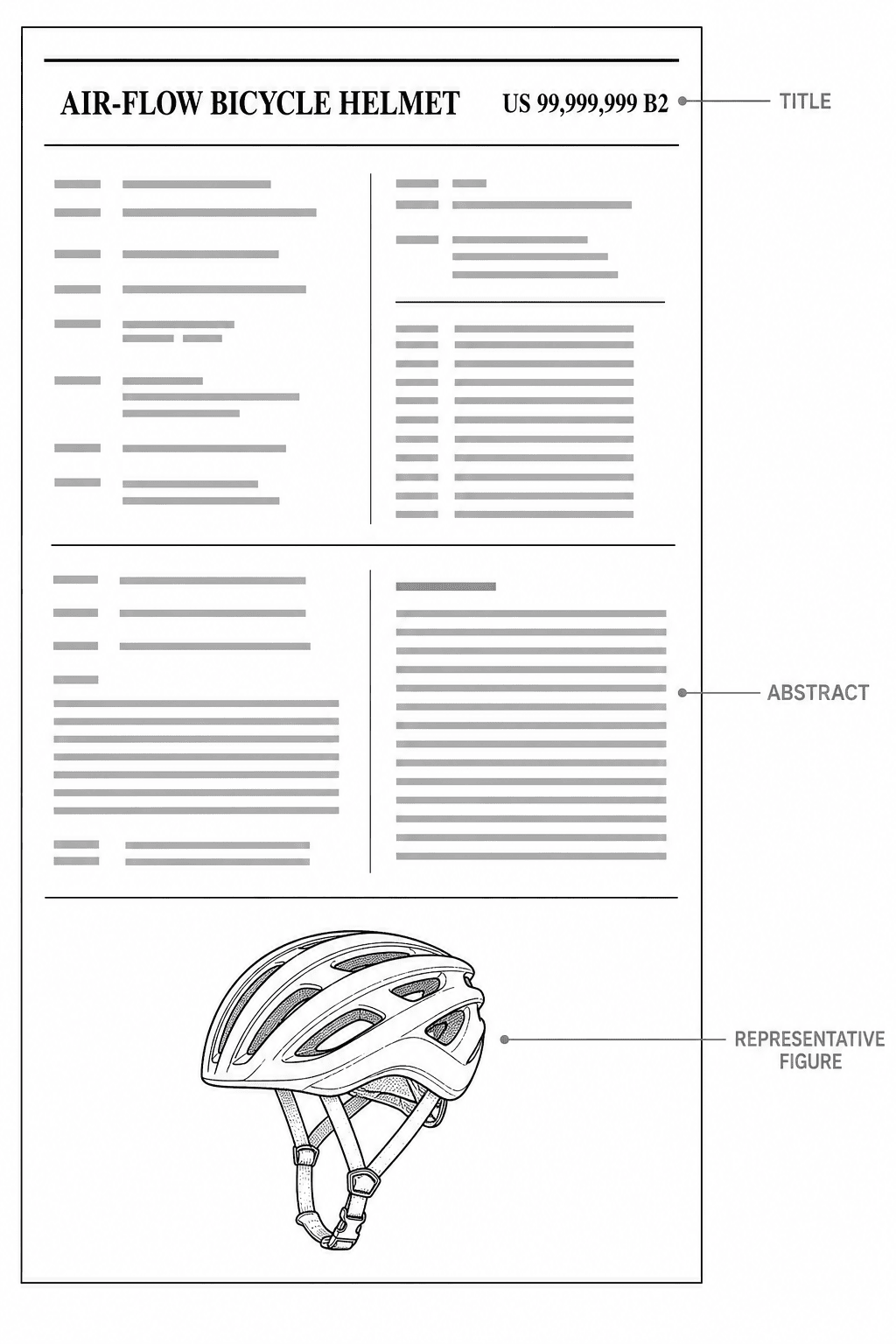
What Does a Patent Look Like? Annotated US Patent Sample & Format (2026)
What does a patent look like? Walk through an annotated US patent sample and patent application format: title page, patent numbers, sample patent abstract, claims, and drawing sheets.
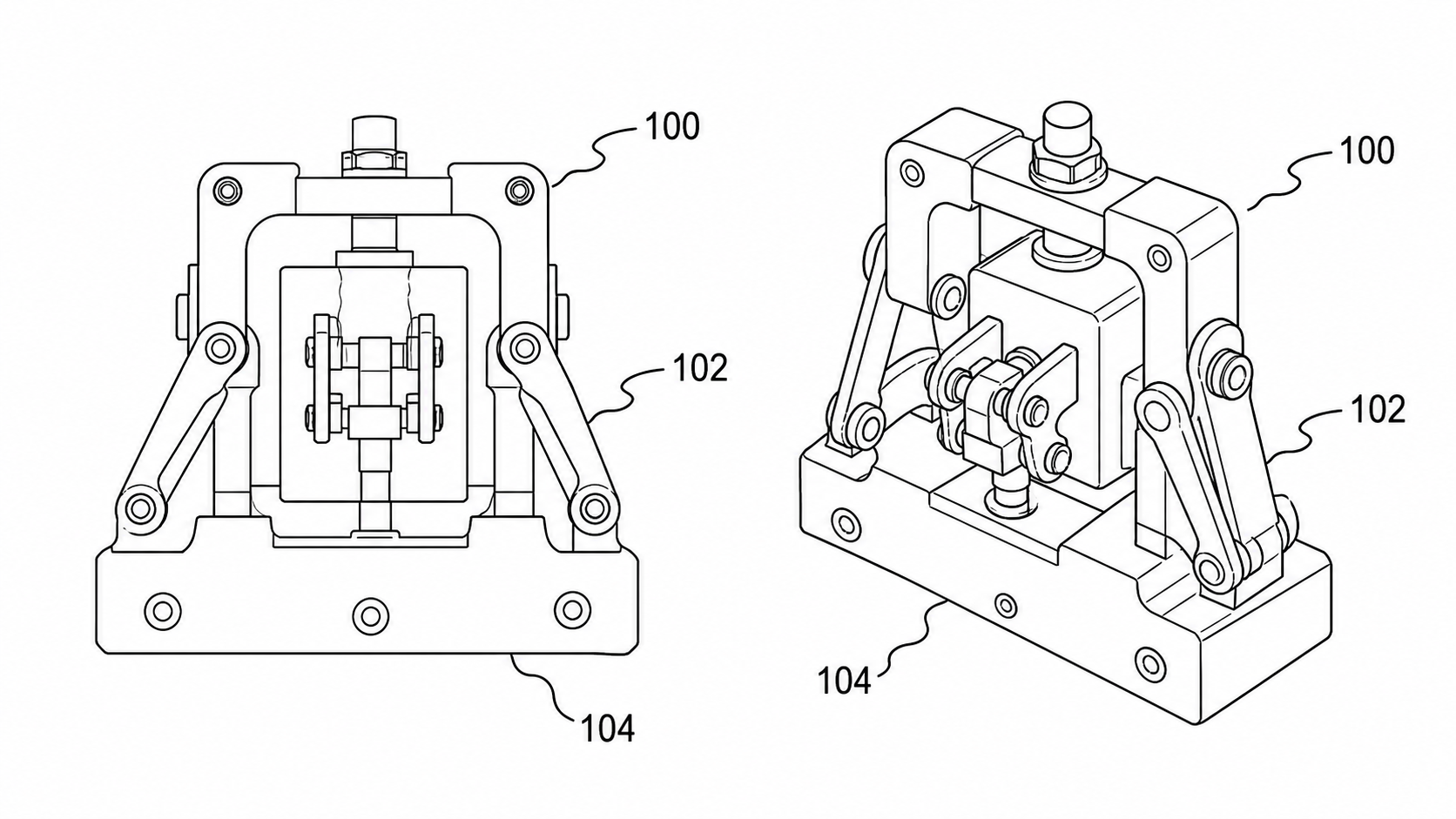
Black-and-White Patent Line Art: Reference Numerals, Lead Lines, and What Examiners Check
How patent figures must be pure black-and-white line art, where reference numerals belong, which lead-line styles pass, and the USPTO 37 CFR §1.84 and CNIPA rejections to avoid.
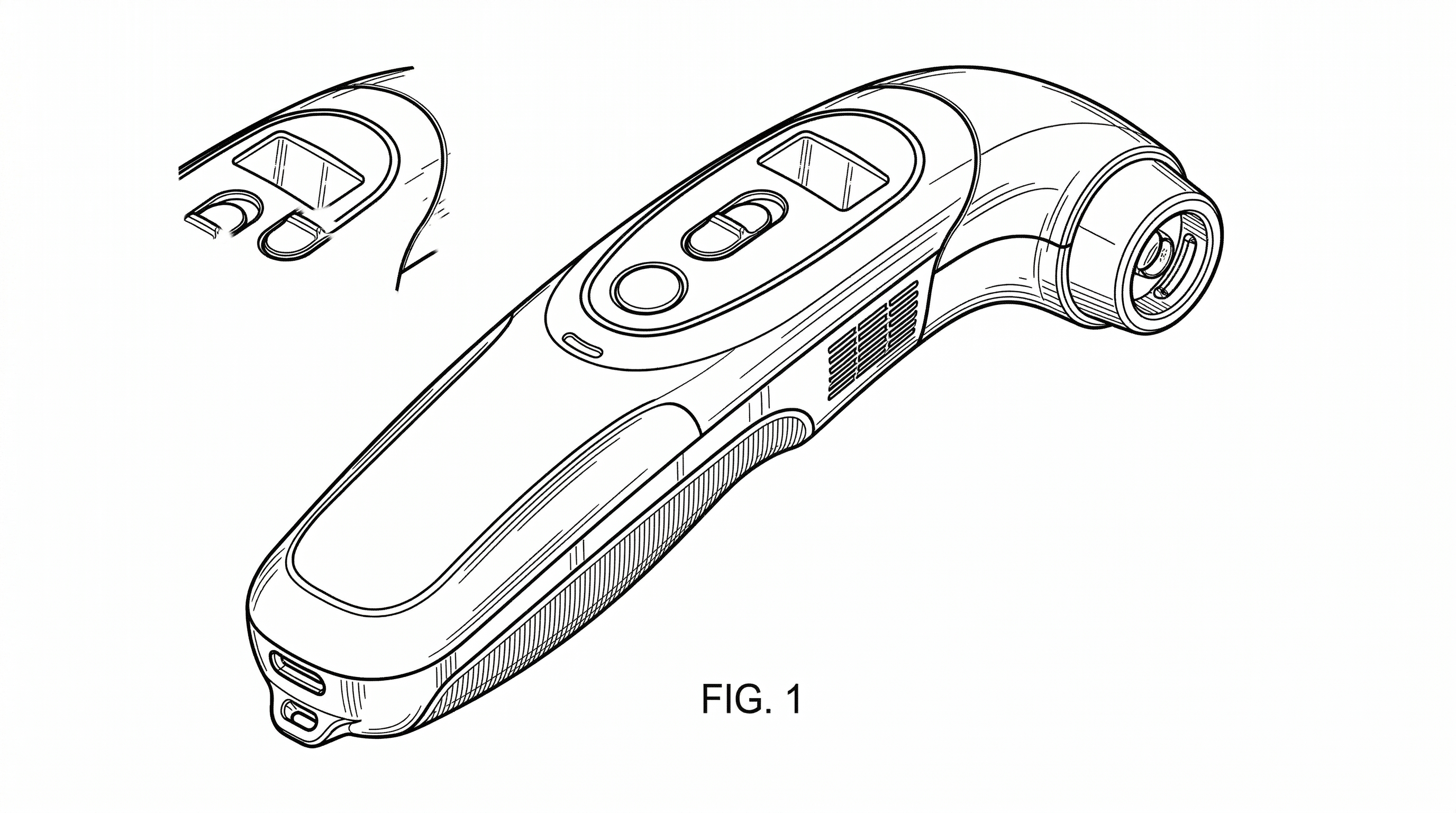
Design Patent Drawings — Broken Lines, Shading & Required Views (2026)
Design patent drawings explained: broken vs solid lines, shading conventions, all 7 required views. USPTO-ready examples included.
Newsletter
Join the community
Subscribe to our newsletter for the latest news and updates