Patent Illustration Cost in 2026: Real Rates, Hiring vs. Software
What patent illustration actually costs in 2026 — per-figure rates from $25 to $300, revision and rush fees, three worked cost scenarios, and the break-even point where software beats outsourcing.
TL;DR: Published 2026 rates: $25–$300 per figure depending on tier and complexity, $50–$100 per revision round, 7–10 day standard turnaround, and $300–$2,000 for a full utility set. Software replaces those meters with about $1 per figure (PatentFig AI Basic: $50/month for 500 credits, ~50 figures; $240/year billed yearly) and same-day drafts, so the break-even usually arrives within a single application — reserve professional fees for the genuinely hard figures.
If you ask "how much do patent drawings cost," the honest answer in 2026 is a range that spans an order of magnitude: from $25 per figure at offshore budget services to $300 per figure for senior illustrators on complex work. Where you land in that range — and how many revision rounds you go through — matters more than any single quote. This post lays out the published numbers, works through three realistic application scenarios, and shows where the break-even point sits between hiring and software.
What Illustrators Actually Charge in 2026
Per-figure (or per-sheet) pricing is the industry standard, and published rates cluster into three tiers:
| Tier | Published rate | Examples of what you get |
|---|---|---|
| Budget / offshore | $25–$59 per figure | Ascadex from $25/figure, PatSketch at $29/figure, The Patent Drawings Company at $59/sheet — fine for simple flowcharts and block diagrams |
| Mid-market US | $100–$125 per sheet | QuickPatents at $100–$124/sheet; design patent sheets often price at the top of the range because each view is its own drawing |
| Senior / specialist | $75–$300 per figure | Complex mechanical assemblies, medical devices, litigation-grade work (VOX Illustration's cost breakdown) |
Three structural facts about these prices:
- Figure count multiplies everything. A utility application typically needs 5–10 figures; a US design application needs at least 7 views (front, rear, left, right, top, bottom, perspective). At quality rates, a complete set runs roughly $525–$2,100 (VOX Illustration).
- Revisions are usually metered. The common pattern is one or two rounds of minor changes included, after which additional rounds bill at $50–$100 per round or hourly (Sagacious IP's pricing analysis).
- Speed costs extra. Standard turnaround is about 7–10 working days; rush delivery typically adds a 20–50% premium (CAD Illustration Services fee schedule).
Three Worked Scenarios
Abstract ranges hide the real decision, so here is the math for three common filings, using mid-market rates ($100/figure, one included revision round, $75 per extra round).
Scenario 1: Provisional application, 3 figures
| Line item | Outsourced | Software (PatentFig AI Basic, $50/mo · 500 credits) |
|---|---|---|
| 3 figures | $300 | included |
| 1 extra revision round | $75 | included |
| Wait time | 7–10 days + revision wait | minutes per draft |
| Total | ~$375 | $50 |
Provisionals are where outsourcing makes the least sense: the figures are informal, deadlines are usually tight, and you may redraw everything for the non-provisional anyway.
Scenario 2: Utility application, 8 figures
| Line item | Outsourced | Software |
|---|---|---|
| 8 figures (multiple views, exploded, section) | $800 | included |
| 2 extra revision rounds | $150 | included |
| Total | ~$950 | $50–$100 (1–2 months) |
This is the typical case. Eight figures with a couple of revision rounds is roughly $950 outsourced versus one or two months of subscription — and the software set arrives the same day, with reference numerals kept consistent across views automatically.
Scenario 3: Design application, 7 views
Design patents are stricter: the seven standard views must agree with each other exactly, and surface shading conventions matter. Mid-market design sheets price around $125 each (QuickPatents), so a full set is ~$875 before revisions. This is also the category where a professional final pass has the strongest argument — design claims live and die by the drawings alone.
The Hidden Cost: Drawing Objections After Filing
Most cost discussions stop at filing. The USPTO does not.
Examiners routinely object to drawings under 37 CFR §1.84 — the most common reasons are a reference numeral used for two different parts (§1.84(p)(4)), numerals mentioned in the specification but missing from the figures (§1.84(p)(5)), and essential structure described in the text but not shown. When that happens:
- Any correction requires full replacement sheets labeled "Replacement Sheet" — the old practice of marking proposed changes in red was eliminated (MPEP 608.02(p)).
- A replacement sheet must include every figure on the original sheet, even if only one changed.
- Corrected sheets are required in your office action reply to avoid abandonment — drawing objections in utility applications are not held in abeyance.
If your originals were outsourced, each objection round means a new invoice and another multi-day wait, often at rush rates because office action deadlines are unforgiving. This is the line item no per-figure quote shows you. (A pre-filing pass with a figure checker is the cheap insurance here — catching a duplicated numeral before filing costs nothing; catching it in an office action costs a correction cycle.)
Where Software Changes the Equation
The expensive part of illustration was never the first drawing — it is the loop: send notes, wait days, pay again. Software collapses that loop to minutes and removes the per-revision meter entirely.
A concrete example of what generated output looks like — a utility figure with reference numerals and leader lines, produced from a plain-text description:
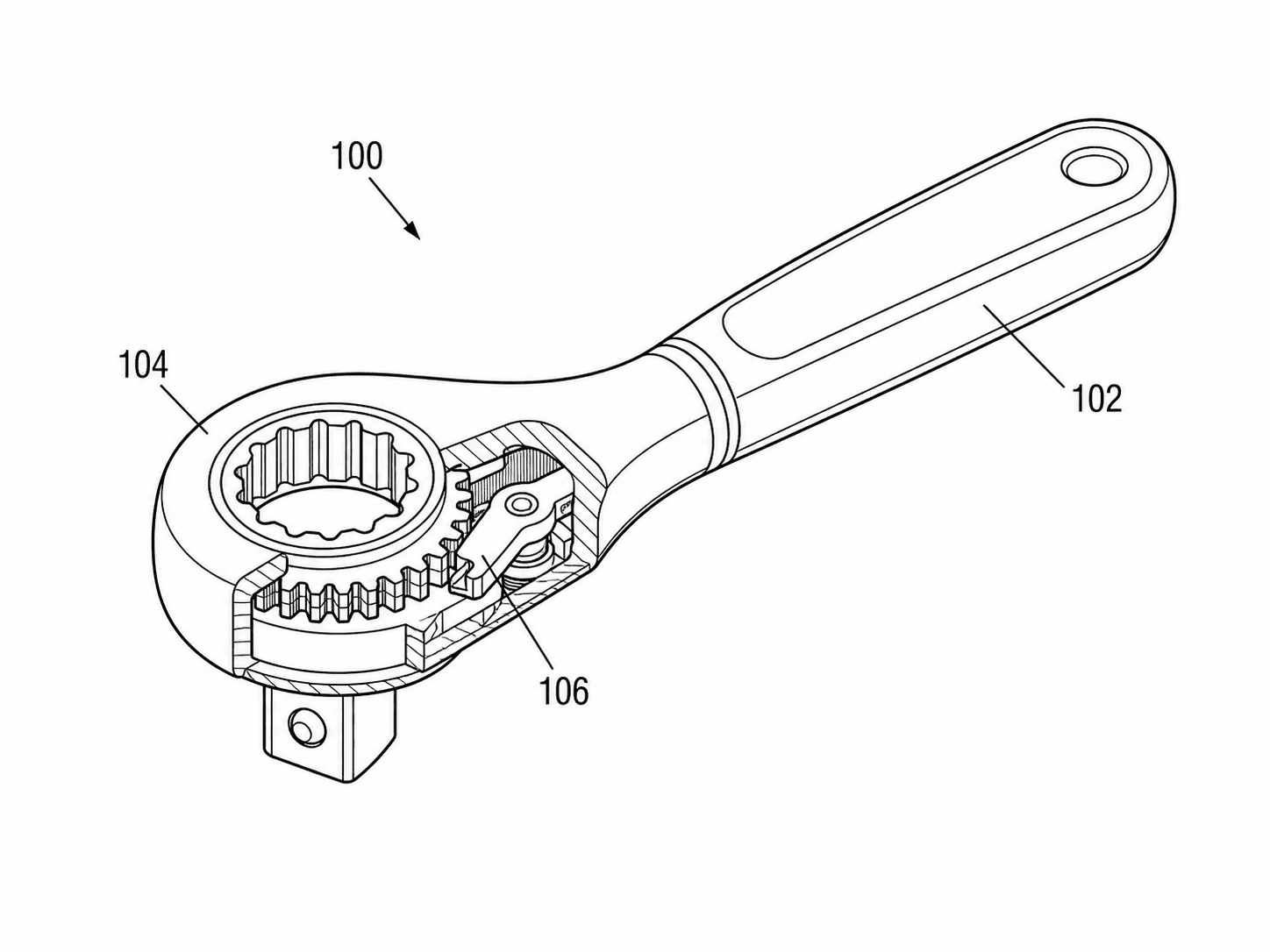
With PatentFig AI, the workflow is: generate from a description, sketch, or photo; add views while numerals stay consistent; revise as many times as needed; validate against your office's rules; then export to the vector formats your filing workflow needs. PatentFig AI starts free (20 credits); the Basic plan is $50/month for 500 credits — about 50 figures at roughly $1 each, and yearly billing works out to about $20/month — less than the published price of a single mid-market figure.
The break-even math is blunt:
| Your volume | Outsourced (mid-market) | Software |
|---|---|---|
| 1 figure, no revisions | ~$100 | $50 (1 month) |
| 1 application (8 figures) | ~$950 | $50–$100 |
| 3 applications / year | ~$2,850 | $240–$600/year ($240 billed yearly) |
| Steady prosecution practice | per-figure + per-correction forever | flat |
When Hiring Still Wins
Software is a drafting accelerator, not a substitute for judgment. Pay for a professional when:
- The invention is mechanically intricate and the linework itself carries the disclosure — think gear trains in partial section, or anatomically precise medical devices.
- The case is high-value or likely to be litigated, where every figure will be scrutinized by opposing counsel.
- You are filing a design application where the drawings are the entire claim and a specialist's conventions (shading, boundary lines) reduce risk.
The efficient pattern most filers converge on: generate and iterate the full set with software, then buy expert polish only for the figures that earn it — paying specialist rates for two hard figures instead of ten easy ones. For the full decision framework, see patent illustration services vs. software.
The Bottom Line
In 2026 the published market says: $25–$300 per figure, $50–$100 per revision round, 7–10 days standard, 20–50% extra for rush, and a full utility set somewhere between $300 and $2,000. Software replaces all of those meters with about $1 per figure on a $50/month plan ($240/year billed yearly) and same-day drafts. Run the math on your own figure count — for most applications the answer is to draft with software, reserve professional fees for the genuinely hard figures, and always have your patent attorney review the final set before filing.
Sources: VOX Illustration · QuickPatents · Ascadex · The Patent Drawings Company · CAD Illustration Services · Sagacious IP · MPEP 608.02(p) · 37 CFR §1.84
Next step: Use the patent drawing software decision guide to choose between patent-native AI, CAD, diagramming, and a human illustrator, then check pricing for the software-side cost.
Author

Categories
More Posts
Patent Illustrator vs AI Software: Cost, Quality, and When to Use Each
Compare AI patent illustration software with traditional patent illustrator services on cost per figure, turnaround time, quality, and when each option fits.
AI Patent Drafting Tools in 2026: 10 Named Tools, Pricing, and Where Figures Fit
A named-tools guide to the 2026 AI patent landscape — Solve Intelligence, DeepIP, Patlytics, Rowan Patents, PatentPal, IPRally, PQAI and more — with published pricing and an honest look at which ones actually produce patent figures.
Building a Patent Software Stack in 2026: Three Recipes, Real Costs
Three concrete patent software stacks — solo inventor, small firm, in-house IP team — with named tools, realistic monthly costs, the data-flow details that make them work, and a two-week pilot plan.
Newsletter
Join the community
Subscribe to our newsletter for the latest news and updates