Building a Patent Software Stack in 2026: Three Recipes, Real Costs
Three concrete patent software stacks — solo inventor, small firm, in-house IP team — with named tools, realistic monthly costs, the data-flow details that make them work, and a two-week pilot plan.
TL;DR: Build the stack in four layers — search, drafting, figures, filing-format output — and buy per bottleneck instead of one broad platform. Realistic 2026 budgets run free-plus-$100/month for a solo inventor and roughly $400–$500/user/month for a boutique; connect the layers through plain document formats and pilot for two weeks before any annual commitment.
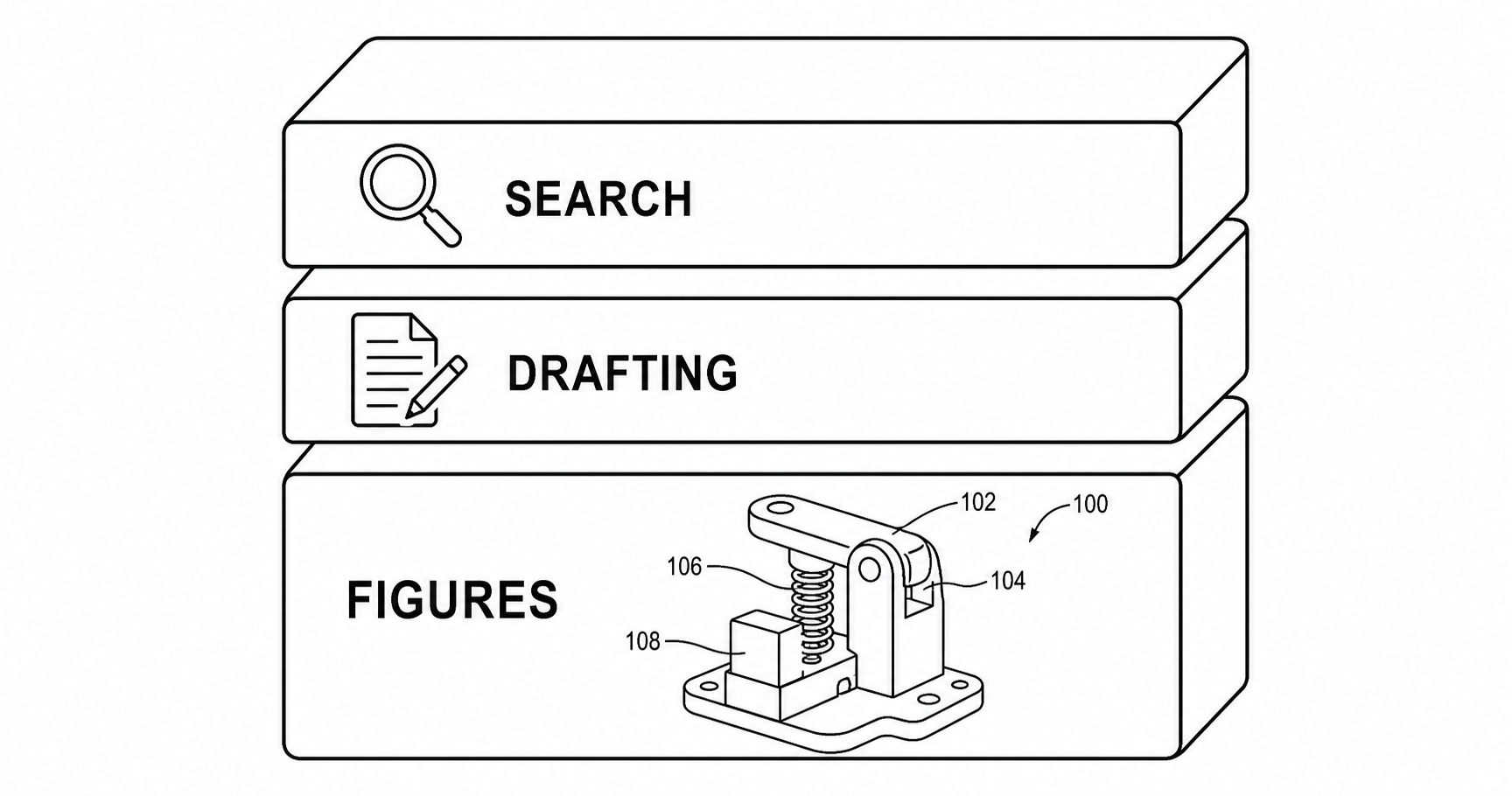
Patent teams rarely buy one tool — they assemble a stack: something for search, something for drafting, something for figures, something for filing-format output. The expensive mistake is buying a broad platform and assuming every layer it bundles is as good as the focused alternative. This post gives three concrete stack recipes with named tools and realistic costs, the data-flow details that make the layers actually connect, and a two-week pilot plan to validate any of it before committing.
The Four Layers
| Layer | Job | Named options (2026) |
|---|---|---|
| Search | Novelty, FTO, invalidity | PQAI (free), IPRally, Ambercite, Patsnap |
| Drafting & prosecution | Claims, spec, office actions | DeepIP, Solve Intelligence, Patlytics, Rowan Patents, PatentPal |
| Figures | Compliant drawings, all views | PatentFig AI; partial coverage in Rowan / PatentPal |
| Export & compliance | Filing formats, office validation | Vectorizer, figure checker, docketing |
For named-tool detail and pricing on the first two layers, see our AI patent drafting tools guide. This post is about composition: which tools go together for which team, and how the documents flow between them.
Recipe 1: Solo Inventor / Startup Founder — ~$100–$150 per month
| Layer | Tool | Cost |
|---|---|---|
| Search | PQAI — plain-English prior-art search | Free |
| Drafting | PatentPal — first-draft spec from claims | $49–$99/mo |
| Figures | PatentFig AI — line art from description/photo/sketch | from $50/mo |
| Review | Patent attorney, engaged for review not drafting | hourly, but fewer hours |
The logic: your scarce resource is cash, so spend attorney hours on judgment (claim scope, §112 support, filing strategy) instead of production work. Run the novelty check before drafting anything — a free PQAI search that kills a non-novel idea is the best money you never spent. Figures from software cost less than one outsourced figure per month — the full cost math is here.
Recipe 2: Small Firm / Boutique — ~$400–$500 per user per month
| Layer | Tool | Cost |
|---|---|---|
| Search | IPRally — graph AI, explainable results | Enterprise contract |
| Drafting | DeepIP — Word add-in, fits firm document practice | ~$350–$420/user/mo (reported) |
| Figures | PatentFig AI — shared seats across attorneys | from $50/mo |
| Compliance | Figure checker pass before every filing | included |
The logic: firms live in Word and bill by output, so a Word-native drafting layer (rather than a separate platform) protects existing workflow, templates, and review redlines. The figure layer is shared infrastructure — paralegals or attorneys generate draft sets, and the per-application illustration spend (typically $300–$2,000 outsourced) converts to a flat line item. Firms running heavy prosecution volume should evaluate Patlytics for the office-action layer specifically.
Recipe 3: In-House IP Team — custom contracts, $1k+ per user per month all-in
| Layer | Tool | Notes |
|---|---|---|
| Search & analytics | Patsnap or IPRally | Landscape, competitor monitoring, FTO |
| Drafting | Solve Intelligence (~$775/user/mo reported) or Rowan Patents | Platform approach; Rowan if claim-spec-figure consistency is the pain |
| Figures | PatentFig AI — multi-office validation (USPTO/EPO/CNIPA/JPO/KIPO/PCT) | In-house teams file in more jurisdictions than anyone |
| Governance | Procurement review of every layer | see security section below |
The logic: in-house teams optimize for portfolio strategy and multi-jurisdiction filing, not billable throughput. The figure layer matters disproportionately here because drawing rules diverge across offices — a set drawn for the USPTO can draw objections at the EPO or CNIPA, and catching that pre-filing beats a correction cycle in every jurisdiction. (Our office-by-office standards reference maps the differences.)
The Data Flow That Makes It Work
A stack only works if documents move cleanly between layers. The handoffs that matter:
- Disclosure → search: plain text. Every search tool accepts a paragraph; no integration needed.
- Search → drafting: PDFs of prior art plus your claim strategy. This handoff is human judgment, deliberately.
- Drafting → figures: this is the one teams get wrong. The figure tool needs the description of the embodiment, not the claims — feed it the spec's structural description (or the original photos/sketches), and it returns numbered figures. The numerals then flow back into the spec text, so generate figures before finalizing the detailed description, not after.
- Figures → filing: PDF or DOCX-embeddable images for the application; vector formats (SVG/DXF) where your docketing or annex workflow wants them; replacement sheets at 300/600 DPI when prosecution requires corrections.
Because every interface is a document format, no layer locks in another — you can swap the drafting tool next year without touching the figure workflow, and vice versa.
The Procurement Questions (Ask Before the Pilot)
Unfiled invention disclosures are among the most sensitive documents a company holds — they are prior art against your own future filings if mishandled, and they are exactly what you are uploading to every layer of this stack. Three questions for every vendor, no exceptions:
- Training: Is customer content used to train models? Is opt-out contractual or a settings toggle?
- Retention: How long are uploads kept, and is deletion verifiable?
- Processing: Where does inference run, and does data leave that boundary?
Any vendor serious about the patent market answers these in writing — PatentFig AI's answers are public on the trust page. A vendor that can't answer is a vendor that hasn't thought about IP customers, whatever the demo looks like.
A Two-Week Pilot Plan
Don't evaluate tools on demos; evaluate on your own cases.
Week 1 — reproduce known work. Take one already-filed application. Re-run its novelty search in the candidate search tool (did it surface the references the examiner later cited?). Re-draft one section in the drafting tool. Regenerate three of its figures from the spec description and compare against what you filed — including a figure checker pass.
Week 2 — run new work end-to-end. One real, non-critical matter through all layers: search → draft → figures → compliance check → attorney review. Log three numbers: hours saved vs. your baseline, revision rounds on the figures, and compliance issues caught pre-filing.
Decide per layer. Keep what won its layer; drop what didn't. A stack's whole point is that these decisions are independent.
The Bottom Line
In 2026 there is a credible named tool for every layer at every budget — free-plus-$100/month for a solo inventor, ~$400–$500/user/month for a boutique, custom contracts in-house. Compose by bottleneck, connect through plain document formats, interrogate every vendor on training/retention/processing, and pilot for two weeks on your own cases before any annual commitment. And whatever the stack, the figures remain their own layer: generate them from the embodiment description, validate per office, and keep attorney review between the stack and the filing.
Sources: Patentext pricing roundup · DeepIP vs Solve Intelligence (Lexology) · PQAI · IPRally · Rowan Patents at Clarivate
Next step: Review the secure patent drawing workflow for law firms before a pilot, then compare the published pricing.
Author

Categories
More Posts
AI Patent Drafting Tools in 2026: 10 Named Tools, Pricing, and Where Figures Fit
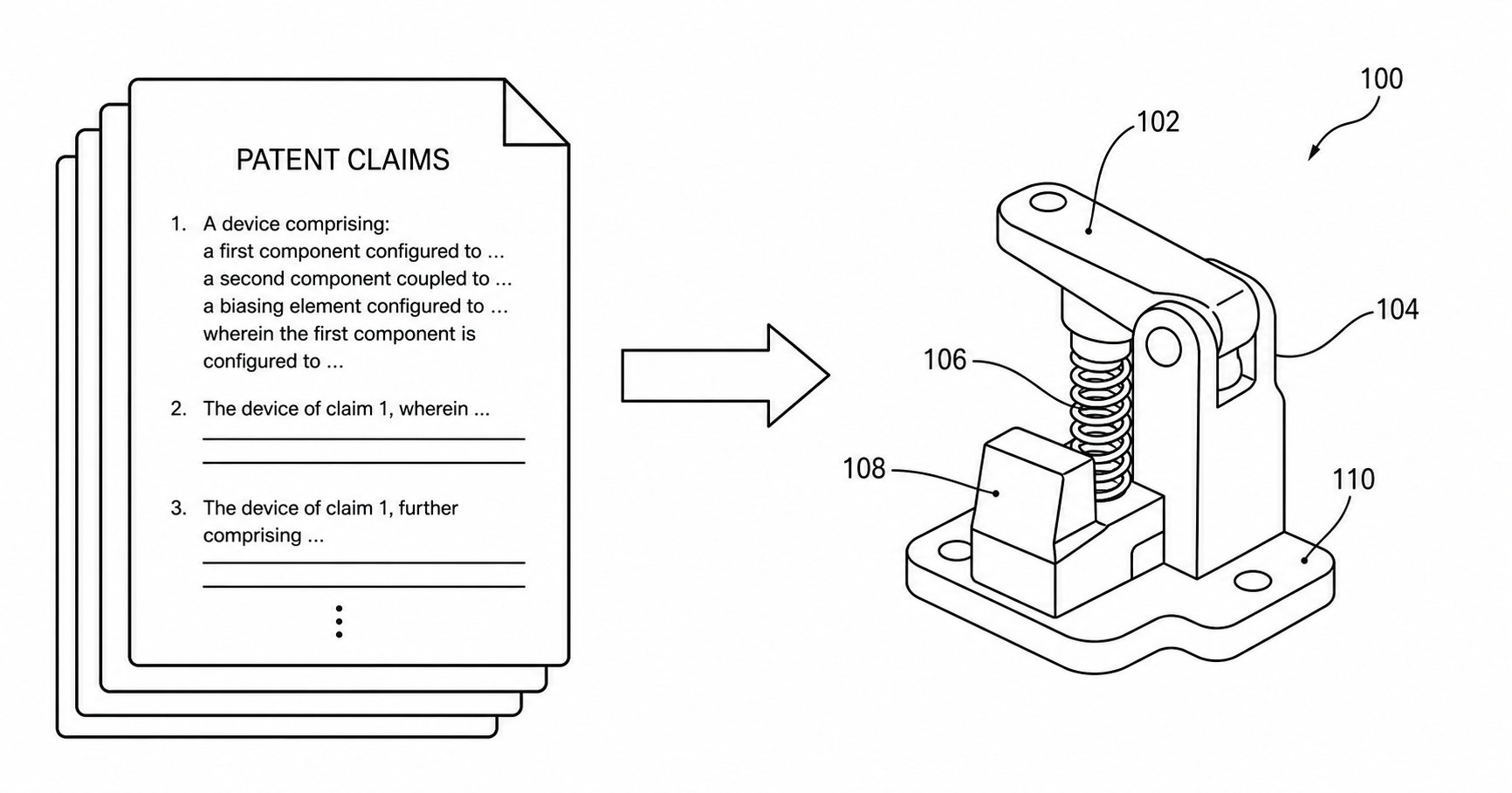
A named-tools guide to the 2026 AI patent landscape — Solve Intelligence, DeepIP, Patlytics, Rowan Patents, PatentPal, IPRally, PQAI and more — with published pricing and an honest look at which ones actually produce patent figures.
Patent Illustration Cost in 2026: Real Rates, Hiring vs. Software
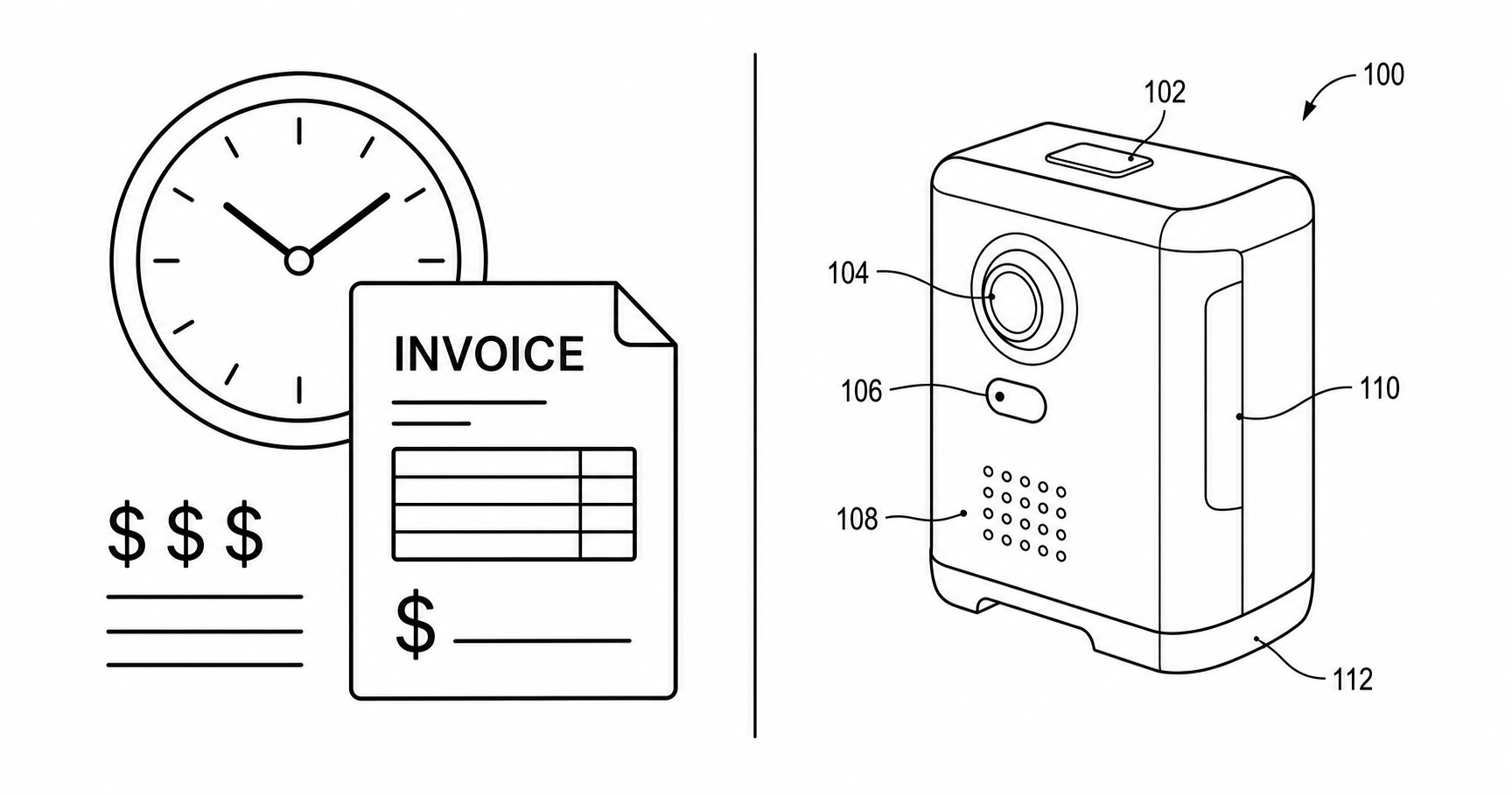
What patent illustration actually costs in 2026 — per-figure rates from $25 to $300, revision and rush fees, three worked cost scenarios, and the break-even point where software beats outsourcing.
Patent Illustrator vs AI Software: Cost, Quality, and When to Use Each
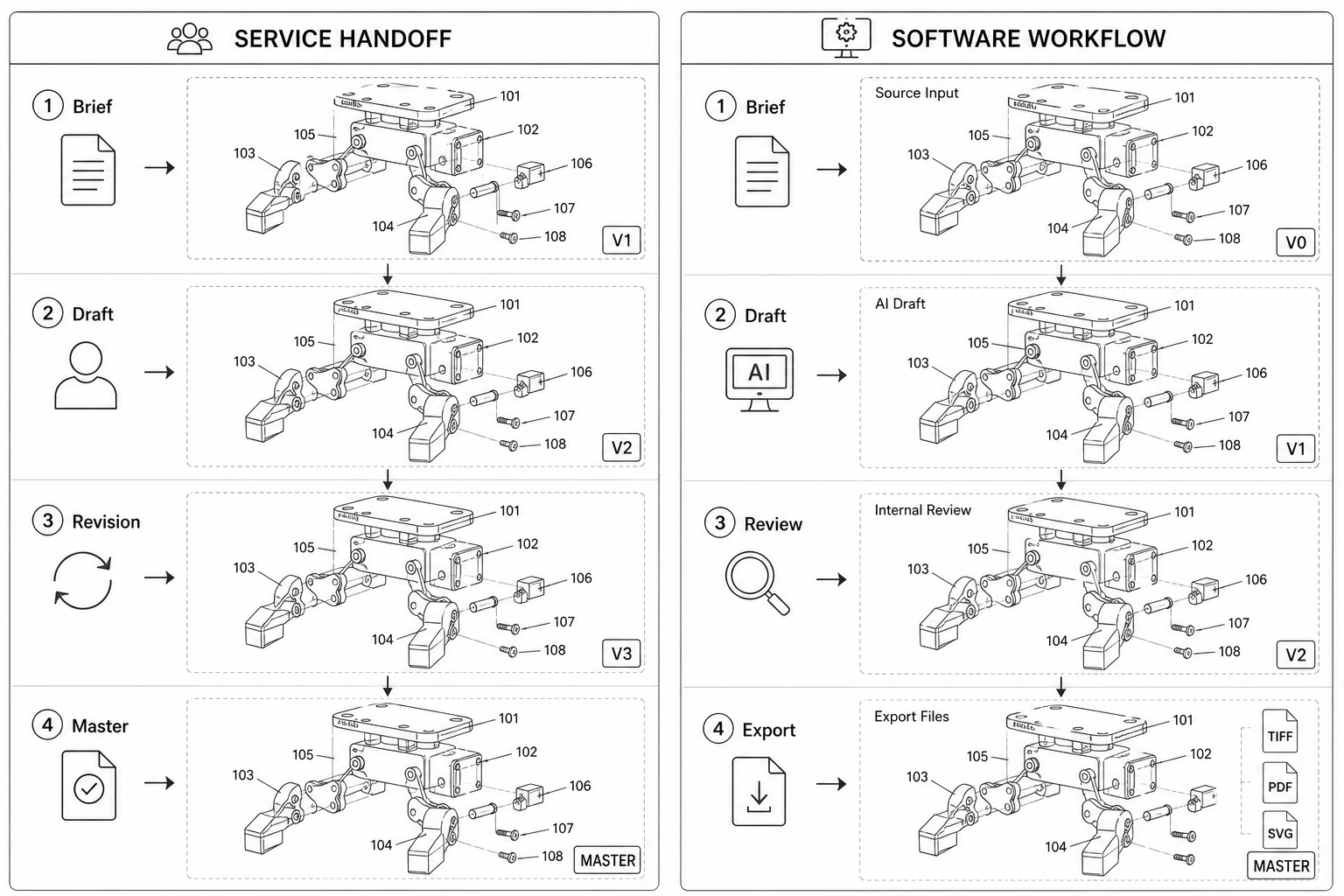
Compare AI patent illustration software with traditional patent illustrator services on cost per figure, turnaround time, quality, and when each option fits.
Newsletter
Join the community
Subscribe to our newsletter for the latest news and updates